

Rabbits are small, furry, constantly chewing, and often mistaken for rodents. It’s an easy mix-up — after all, they seem to fit right in with rats, mice, and squirrels. But are rabbits really rodents? In this post, we’ll answer that exact question. You’ll learn what defines a rodent, why rabbits often get grouped with them, what rabbits actually are, and the key scientific differences between the two.
What Are Rodents?
Rodents are mammals that belong to the order Rodentia, which includes animals like rats, mice, squirrels, beavers, and guinea pigs. The most distinctive feature of rodents is their two large upper front teeth, which never stop growing. To keep them from overgrowing, rodents gnaw constantly — on wood, food, wires, and even cages. Rodents are found all over the world and are incredibly diverse, with more than 2,000 known species. While many are herbivores, some rodents are omnivores, depending on the species and environment.
Why People Think Rabbits Are Rodents
Rabbits share a number of similarities with rodents, which is why they’re so often confused with them. Like rodents, rabbits are:
- Small mammals
- Have strong, ever-growing front teeth
- Constantly chew
- Often kept as pets
- Quick to reproduce
Historically, rabbits were classified as rodents until the early 20th century. At that time, scientists discovered critical differences — especially in dental structure and digestion — that led to rabbits being moved to their own order: Lagomorpha. However, the old classification still sticks in people’s minds, leading to confusion.
What Rabbits Actually Are
Rabbits are lagomorphs, not rodents. They belong to the order Lagomorpha, which is completely separate from Rodentia. This group includes hares and pikas — animals with unique biological traits that set them apart from rodents. Below is a deeper look at what makes rabbits different:
1. Order: Lagomorpha
Lagomorpha is the scientific order that includes rabbits, hares, and pikas. While lagomorphs and rodents may look alike, they diverged from a common ancestor millions of years ago. Lagomorphs have their own evolutionary lineage, making them distinct from all rodents.
2. Family: Leporidae
Within Lagomorpha, rabbits and hares belong to the family Leporidae. These animals share key features such as long ears, powerful hind legs, and short tails. Pikas, on the other hand, belong to the family Ochotonidae and live in colder, mountainous regions.
3. Four Upper Incisors
Rabbits have four upper front teeth — two large incisors in front and two smaller ones (called peg teeth) behind them. This is one of the most important dental differences between lagomorphs and rodents, who only have two upper incisors.
4. Strict Herbivores
Unlike many rodents, which can eat a mix of plants and proteins, rabbits are obligate herbivores. They feed exclusively on grass, hay, leafy greens, and certain vegetables. Their digestive systems are specialized to break down tough plant fibers efficiently.
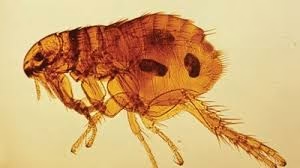
Also Read: Rabbit Flea (Spilopsyllus cuniculi) Control Florida
5. Digestive Process: Cecotrophy
Rabbits have a unique digestive process called cecotrophy. They produce two types of feces, and re-ingest the softer type (cecotropes) to absorb essential nutrients. This behavior helps maximize the nutritional value of their plant-based diet.
6. Lagomorph Relatives
Rabbits are closely related to hares and pikas, the other two members of Lagomorpha. Hares are larger, faster, and generally live above ground, while pikas are small, round animals found in cold mountain habitats. All three share key biological traits.
Why Rabbits Are Classified as Lagomorphs, Not Rodents
The reclassification of rabbits was based on scientific discoveries in anatomy, dentition, and digestive biology. Their possession of four upper incisors, unique jaw movement, and specialized digestion made it clear they didn’t belong with rodents. Modern taxonomy places rabbits in Lagomorpha — a group that better reflects their true evolutionary path. Understanding this distinction is important not just for biology, but for proper veterinary care and species conservation efforts.
Rabbits vs. Rodents:
| Feature | Rodents | Rabbits (Lagomorphs) |
| Order | Rodentia | Lagomorpha |
| Upper Incisors | 2 | 4 (2 front + 2 peg teeth) |
| Diet | Varies (herbivores, omnivores) | Strict herbivores |
| Digestion | Simple | Cecotrophy (re-eating cecotropes) |
| Relatives | Mice, rats, squirrels | Hares, pikas |
| Skull & Jaw Structure | Rodent-type | Lagomorph-type |
| Historical Classification | Always Rodents | Formerly classified as rodents |
This side-by-side comparison highlights why rabbits don’t belong in the rodent category. Despite some similarities, the differences are fundamental and rooted in their biology.
Conclusion
Despite their rodent-like appearance and behavior, rabbits are not rodents. They belong to their own unique order: Lagomorpha. From extra incisors and specialized digestion to different evolutionary roots, rabbits stand apart from rodents in significant ways. Knowing the difference isn’t just scientific trivia — it’s key for proper care, classification, and appreciation of these fascinating animals. So next time you hear someone call a rabbit a rodent, you’ll be ready with the facts.
FAQs
Are rabbits and rodents closely related?
Not very closely. While they share a distant evolutionary ancestor, rabbits and rodents belong to completely different mammal orders with key biological differences.
What animals are true rodents?
Rodents include rats, mice, squirrels, beavers, guinea pigs, hamsters, and porcupines. All of them share a similar dental structure with just two upper incisors.
Why do rabbits chew like rodents?
Rabbits have continuously growing teeth, like rodents, so they need to chew to keep their teeth worn down. However, their overall dental structure is different.
Are hares and pikas rodents?
No. Like rabbits, both hares and pikas are lagomorphs. They share a closer relationship with rabbits than with any type of rodent.
Were rabbits ever considered rodents?
Yes. For many years, rabbits were mistakenly classified as rodents. Advances in biology and anatomy led scientists to reclassify them as lagomorphs in the early 20th century.