
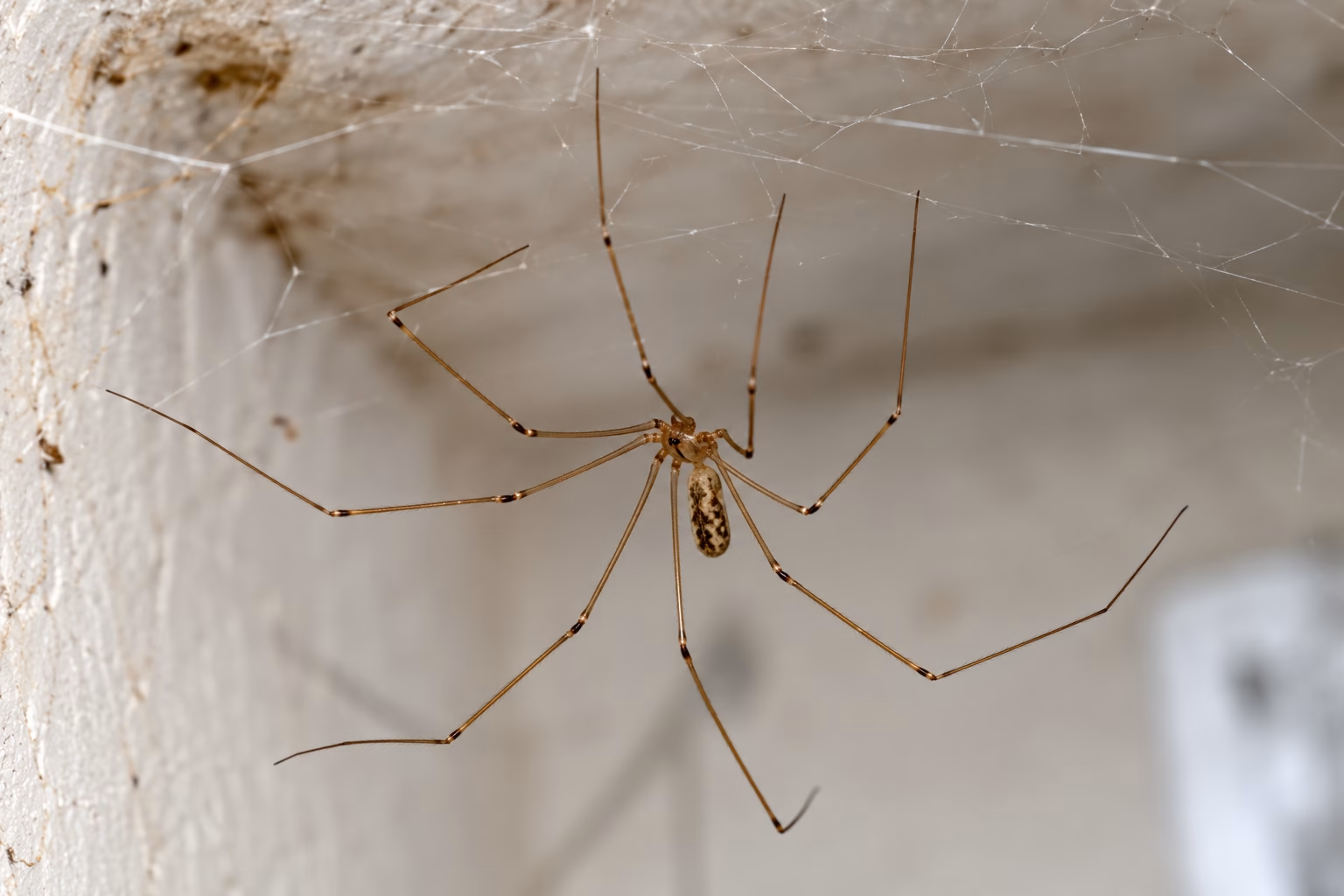
Cellar spiders are the thin, long-legged arachnids you find hanging upside down in basement corners, garage ceilings and closet walls. In Florida, where basements are rare, they show up just as often in crawl spaces, lanais, garages, and shaded storage rooms. Often called daddy longlegs spiders, they belong to the family Pholcidae and are known for their pale bodies and loose, tangled webs.
This guide breaks down their body features, web style, habitat and behavior in detail so you can identify them quickly and tell them apart from look-alikes like harvestmen, house spiders, and brown recluses, both of which are also common across Florida homes.
What Is a Cellar Spider?
A cellar spider belongs to the family Pholcidae, a group of arachnids known for their pale, translucent bodies and extremely long, thin legs. The most common species found in homes across North America and Europe is Pholcus phalangioides, often called the long-bodied cellar spider. Other members of the family, such as Pholcus manueli and Physocyclus globosus, share the same general look but appear less often indoors. Florida’s warm, humid climate makes it an especially favorable habitat for these species, and cellar spiders can be found in homes throughout the state year-round.
People also call them “daddy long legs spiders” or “skull spiders,” a nickname tied to the shape of their cephalothorax, which can resemble a tiny skull under magnification or a strong flashlight beam. This is one reason cellar spiders get mixed up with other daddy long legs creatures, even though only true spiders spin silk webs.
Cellar spiders are not aggressive and rarely bite humans, even when disturbed. They are considered a nuisance pest rather than a health threat, and many Florida homeowners actually welcome them indoors because they prey on flies, gnats, and other spiders, including species that pose a genuine risk.
Cellar Spider Physical Characteristics
Correct identification starts with the body. Here are the key features to check:
- Body size: Roughly 2 to 10 millimeters (0.08 to 0.4 inches) long, not counting the legs.
- Leg length: Legs can stretch 4 to 5 times the body length, sometimes reaching 2 inches or more.
- Color: Pale yellow-gray or light brown, often translucent under light.
- Body shape: Small oval abdomen with a narrow, elongated cephalothorax.
- Eyes: Eight eyes arranged in two groups of three, plus two smaller eyes in the center.
- Movement: Cellar spiders vibrate rapidly in their webs when disturbed, making them hard to focus on visually, this “shaking” motion is one of the clearest identification signs.
| Feature | Cellar Spider Detail |
| Leg span | Up to 2 inches |
| Body length | 2 to 10 mm |
| Color | Pale yellow to light gray |
| Eyes | 8, in two triads plus a center pair |
| Web type | Loose, irregular, tangled |
| Bite risk | Very low, mild reaction if any |
Taken together, these traits, the pale slender body, oversized legs, and signature vibrating defense, make cellar spiders one of the easier household arachnids to identify on sight, even without a magnifying glass.
Cellar Spider vs Daddy Long Legs vs Harvestman
This is where most confusion happens. Three completely different creatures share the “daddy long legs” nickname and only one is a true spider.
| Trait | Cellar Spider (Pholcidae) | Harvestman (Opiliones) | Crane Fly |
| Classification | True spider | Arachnid, not a spider | Insect, not an arachnid |
| Body sections | Two (cephalothorax + abdomen) | One fused body | Head, thorax, abdomen |
| Builds a web | Yes | No | No |
| Has fangs/venom | Yes, mild | No venom glands | No |
| Legs | 8, very thin | 8, thicker and jointed | 6, insect legs |
| Common location | Basements, garages, closets | Gardens, leaf litter, damp soil | Near lights, grass |
If it is sitting in a web, it is almost certainly a cellar spider. If it is walking freely on the ground with no web nearby, it is likely a harvestman. In Florida, harvestmen are commonly seen in mulch beds, garden edges, and leaf litter around the yard, while cellar spiders stick to sheltered, web-friendly spots indoors and around structures.
Where Do Cellar Spiders Live?
Cellar spiders favor dark, damp, undisturbed spaces where they can build a web and stay hidden for long stretches of time. Inside Florida homes, you will usually spot them in:
Crawl spaces and utility closets, Garages and sheds, Closets and storage rooms, window wells and ceiling corners, behind furniture, appliances, or boxes that rarely get moved, attics with poor ventilation, which can trap heat and humidity under Florida’s intense summer sun, lanais, screened porches, and pool enclosures where humidity stays high
Outdoors, they hide under rocks, loose tree bark, and in wood piles or inside outbuildings like sheds and garden structures with high humidity. Stone walls, drainage areas, and shaded porch corners also make suitable outdoor habitats when conditions stay damp, which describes much of Florida for large parts of the year.
Cellar spiders prefer temperatures between 70 and 80 degrees Fahrenheit and struggle to survive freezing conditions, since their bodies have little tolerance for cold exposure. Florida’s mild winters rarely dip into freezing territory across most of the state, so unlike homes in colder climates, cellar spiders here are not limited to seeking shelter indoors during winter, they can remain active outdoors nearly year-round. Once settled into a dark corner with steady humidity, a cellar spider rarely relocates on its own, which explains why the same garage or closet corners tend to host webs year after year in Florida homes.
Cellar Spider Web Identification
The web itself is a strong identification clue, often easier to spot than the spider hiding inside it. Cellar spider webs are:
Loose and irregular, not symmetrical like an orb weaver’s web Built in corners where walls meet ceilings, or between shelves and furniture Often layered, old webs get added to rather than replaced, creating a thicker mesh over time Coated in dust over time, giving them a gray, cobweb-like look Home to the spider hanging upside down at the center, motionless until disturbed Spread across multiple nearby corners once a population settles into one room
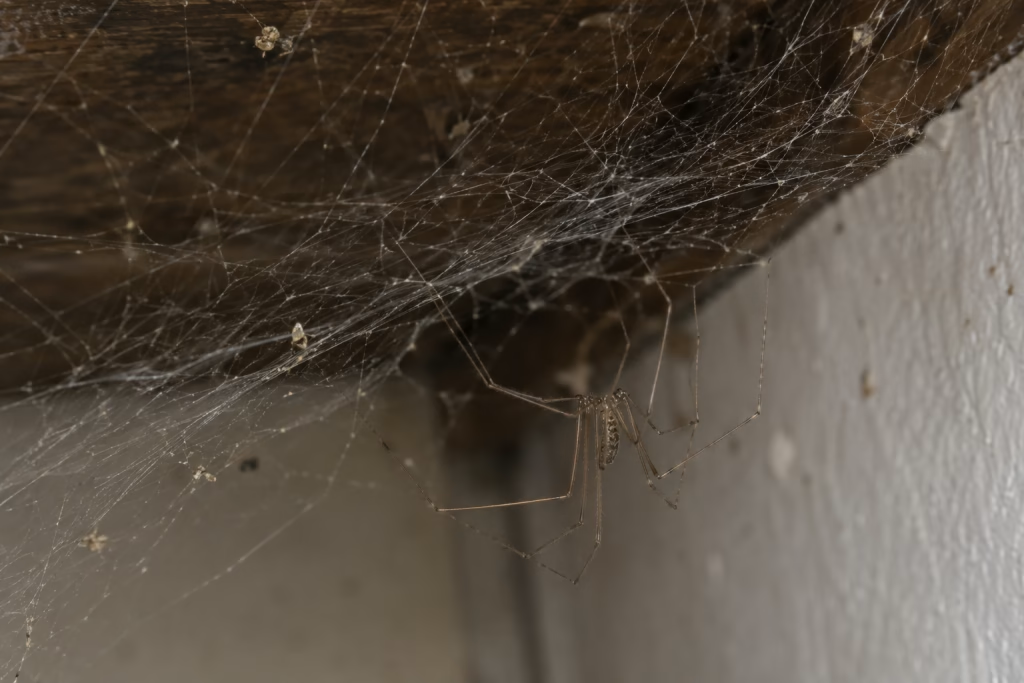
This messy, tangled structure is why cellar spider webs are frequently mistaken for generic “cobwebs,” even though the two terms describe the same thing in most cases. A single web usually means one resident spider, but a heavy buildup of overlapping webs in one area signals an active, breeding population nearby rather than an occasional visitor passing through. In Florida’s humidity, webs can also accumulate faster than in drier climates, so checking ceiling corners, closet edges, and behind stored items is the fastest way to confirm how far a web network has spread.
Are Cellar Spiders Dangerous?
No. Cellar spiders pose almost no threat to people, despite their unsettling appearance in dark corners. There is a long-running myth claiming they have the most toxic venom of any spider, but their fangs are too short to bite through human skin. This claim is false and has no scientific backing. Their venom has never been tested to rank among dangerous species, and their fangs, while small, are fully capable of piercing skin.
That said, bites are rare and mild. Most people never get bitten, since cellar spiders avoid confrontation and retreat or vibrate rapidly in their web instead of attacking when threatened. Symptoms, if they occur at all, are limited to slight redness or a small itch that fades within a few hours, with no lasting effects.
Cellar spiders also provide a genuine natural benefit around the home. They hunt and eat other household pests, including mosquitoes, flies, moths, and even more dangerous spiders like the brown recluse and black widow, making them an unlikely but effective form of pest control. Given how prevalent mosquitoes are in Florida’s warm, humid environment, this is a particularly welcome benefit for homeowners across the state.
Cellar Spider Behavior and Lifecycle
Understanding behavior helps confirm identification and predict how populations grow over time.
- Egg Sacs: Females carry a loose, visible cluster of 20 to 50 eggs in their chelicerae (mouthparts) instead of wrapping them tightly like most spiders. The eggs stay in plain sight until they hatch.
- Lifespan: Cellar spiders can live 2 to 4 years indoors, far longer than most household spiders, which typically survive only a single season.
- Web Maintenance: They rarely rebuild from scratch. Instead, they patch and expand existing webs, adding new silk layers on top of old ones as the structure grows.
- Feeding Habits: Cellar spiders wrap prey in silk before feeding, including insects and other spiders caught in or near their web. This method lets them subdue prey larger than themselves.
- Defense Response: When threatened, they shake violently in the web, a motion called “whirling,” to blur their outline and confuse predators or anything that gets too close.
This long lifespan explains why a single garage or closet corner can host generations of cellar spiders if left undisturbed, with new webs simply layering onto the old ones year after year. Florida’s warm, humid climate supports steady breeding activity for more of the year compared to regions with cold winters that slow reproduction.
Common Cellar Spider Look-Alikes
Several household spiders get mistaken for cellar spiders. Knowing the differences prevents misidentification and unnecessary pest treatment, which matters in Florida given how many spider species are active statewide.
Look-Alike Key Difference from Cellar Spider House spider (Parasteatoda) Shorter legs, rounder abdomen, builds tighter webs Brown recluse Solid brown body, violin marking, no long thin legs (rare in Florida, but occasionally reported in the panhandle) Wolf spider No web, hairy body, hunts on the ground, common outdoors in Florida yards Daddy long legs (harvestman) Fused body, no web, not a true spider Southern house spider Larger, darker, builds funnel-shaped webs outdoors, frequently seen on Florida homes near porch lights and eaves
Comparing leg length, web presence, and body shape side by side takes most of the guesswork out of identification and helps rule out species that actually warrant more caution, like the black widow, which is present throughout Florida.
How to Identify a Cellar Spider Infestation
A few cellar spiders in a garage or closet is normal and rarely cause for concern. An infestation shows different, more noticeable signs:
Multiple overlapping webs across ceilings, corners, and shelving Visible egg sacs held by resident females in several locations Spiders present in nearly every dark corner of a room, not just one or two spots Dust-covered webbing that keeps regrowing within days after cleaning Increased sightings in previously spider-free areas of the home, including bedrooms and hallways A noticeable rise in prey insects, since more spiders often means more food source activity nearby
If you notice several of these signs together, the population has likely established a breeding presence rather than a few stray visitors passing through. A single web in one corner usually reflects normal, low-level activity. Widespread webbing across multiple rooms, paired with visible egg sacs and repeat regrowth after cleaning, points to a sustained colony that will keep expanding unless the underlying moisture and clutter conditions get addressed directly, something that requires extra attention in Florida’s humid, subtropical climate.
How to Get Rid of Cellar Spiders
Since cellar spiders thrive in damp, undisturbed areas, control focuses on habitat disruption rather than chemical treatment alone. This is especially important in Florida, where humidity levels stay high for much of the year.
Reduce Humidity
Run a dehumidifier in crawl spaces, garages, and enclosed porches to bring moisture below 50 percent. Cellar spiders struggle to establish webs in drier conditions, which can be a persistent challenge during Florida’s summer rainy season.
Remove Webs Regularly
Use a vacuum or broom to clear webs weekly, which discourages resettlement. Consistent removal breaks the pattern of layering that lets webs grow undisturbed.
Seal Entry Points
Caulk cracks around foundations, windows, and utility lines. Closing off these gaps limits how easily spiders move indoors from outside hiding spots, a common issue in Florida’s older homes and stucco construction.
Cut Off Food Sources
Control other insects like flies, gnats, and mosquitoes that cellar spiders prey on. Fewer prey insects means less reason for spiders to settle in a given area, particularly relevant given Florida’s high mosquito activity.
Declutter Storage Areas
Boxes and undisturbed piles create ideal hiding spots. Clearing and organizing storage areas removes the dark, quiet corners spiders rely on.
Install Door Sweeps
Block gaps under exterior doors leading to garages or screened enclosures. This closes off a common entry point that often gets overlooked.
Improve Ventilation
Address the root moisture problem instead of just clearing webs. Better airflow keeps humidity levels down and makes a space far less hospitable long-term, an ongoing task for Florida homeowners managing year-round humidity.
These steps target the conditions that attract cellar spiders in the first place, which is more effective long-term than repeated web removal alone, especially in a climate like Florida’s where moisture control is a constant factor.
When to Call a Pest Control Professional
Most cellar spider situations do not require professional intervention and can be managed with basic humidity control and regular cleaning. Call a licensed Florida pest control provider if:
Webs return heavily within days of cleaning, despite consistent moisture control efforts You suspect a mixed infestation involving other spider species alongside cellar spiders The crawl space or garage has persistent, unresolved moisture issues that DIY dehumidifiers cannot fix You want an inspection to rule out more concerning pests, such as brown recluses or black widows, both of which occur in Florida The infestation spans multiple rooms or floors rather than staying contained to one area
A professional inspection can confirm species identification with certainty, something that’s hard to guarantee from a quick visual check alone. Florida pest control providers are also familiar with the state’s specific humidity and moisture challenges, and can target the underlying issues that DIY methods sometimes miss, using tools and treatments not typically available to homeowners. This combination of accurate identification and root-cause treatment tends to produce longer-lasting results than repeated cleaning on its own.
Final Thoughts
Cellar spiders are easy to identify once you know what to look for: pale, thin bodies, extremely long legs, loose tangled webs, and a habit of hanging upside down in dark corners. They are not dangerous, and in most cases they help control other household pests rather than cause harm, a helpful trait in Florida given the state’s abundant insect population.
The real focus should be on moisture and habitat control rather than fear of a bite that almost never happens. With regular web removal, humidity management, and sealed entry points, most Florida homes can keep cellar spider populations low without needing chemical treatment.
FAQs
What Does A Cellar Spider Look Like?
A cellar spider has a small, pale body, usually 2 to 10 mm long, with extremely thin legs that can span up to 2 inches. It hangs upside down in a loose, tangled web.
Are Cellar Spiders The Same As Daddy Longlegs?
Not always. “Daddy long legs” can refer to the cellar spider, the harvestman (Opiliones), or the crane fly. Only the cellar spider is a true spider that builds a web.
Can Cellar Spiders Bite Humans?
Yes, but rarely. Their fangs can pierce skin despite their small size, and bites cause mild redness or itching at most.
Is The “Most Venomous Spider” Myth About Cellar Spiders True?
No. This claim about cellar spiders having deadly venom but harmless fangs is a myth with no scientific backing.
Why Do Cellar Spiders Live In Florida Homes?
They prefer dark, damp, undisturbed spaces with stable temperatures between 70 and 80 degrees Fahrenheit, which Florida’s warm, humid climate naturally provides year-round in crawl spaces, garages, and closets.
How Long Do Cellar Spiders Live?
They can live 2 to 4 years indoors, which is significantly longer than most common household spider species.
Do Cellar Spiders Eat Other Spiders?
Yes. They prey on insects and other spiders, including more harmful species like brown recluses and black widows, caught in or near their web.
How Can I Tell A Cellar Spider Web From Other Cobwebs?
Cellar spider webs are loose, irregular, and layered over time in corners where ceilings meet walls, usually with the spider visible hanging in the center.
What Attracts Cellar Spiders To A Florida Home?
High humidity, clutter, undisturbed corners, and an available insect food supply all attract and support cellar spider populations, conditions that are common throughout Florida for much of the year.
How Do I Get Rid Of Cellar Spiders Naturally?
Reduce indoor humidity, vacuum webs regularly, seal cracks and gaps, declutter storage areas, and limit other insects that serve as their food source.