
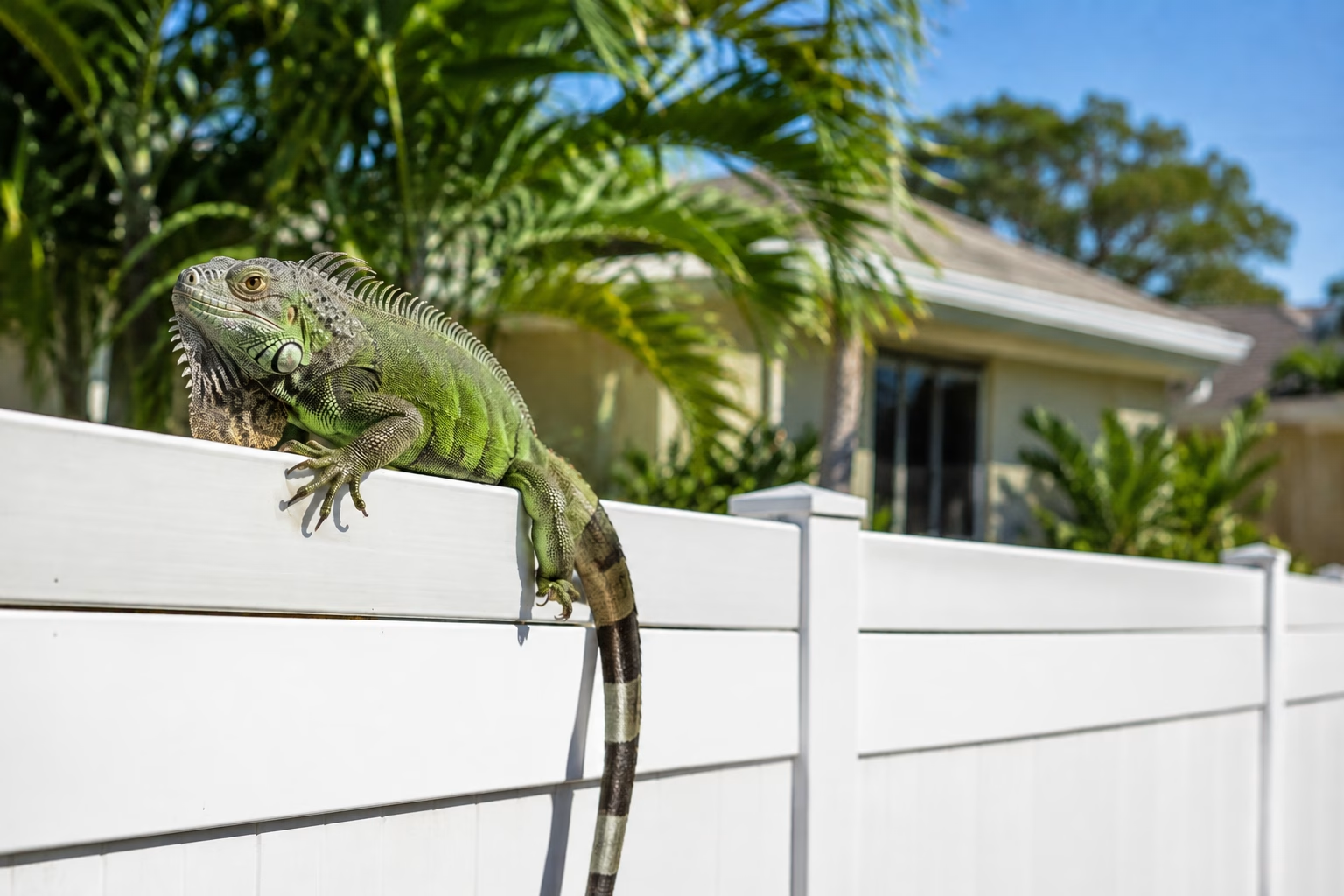
If you’ve spotted a green iguana sunning itself on your seawall or tearing through your landscaping, you’re not alone. Florida homeowners spend anywhere from $200 to $3,000 on iguana removal, depending on the size of the infestation, the property’s location, and the removal method used.
This guide breaks down real pricing, the factors that drive costs up or down, and how to choose a licensed nuisance wildlife control operator so you can budget accurately and get the problem solved for good.
How Much Does Iguana Removal Cost in Florida?
Most Florida homeowners pay between $200 and $2,000 for professional iguana removal, with a statewide average landing around $1,250 for a complete job. A single-visit removal for one or two iguanas typically starts at $199 to $360, while properties with established colonies, multiple burrows, or difficult access can climb toward $2,000 to $3,000, especially in dense South Florida markets like Broward, Palm Beach, and Miami-Dade counties.
Pricing generally breaks down into three tiers:
- Single-visit removal: $199–$360 for one or two visible iguanas with easy access
- Multi-day or infestation-level removal: $500–$2,000 for established populations, breeding females, or multiple burrows
- Ongoing monthly control: $100–$600 per month for canal-front or waterfront properties with chronic activity
Commercial properties, HOAs, marinas, and golf courses are usually quoted separately, since square footage, shoreline exposure, and population density vary too widely for a flat rate. This variability is exactly why most companies require an on-site inspection before finalizing a number.
Average Iguana Removal Costs by Service Type
Seeing the numbers side by side makes it easier to understand where your money goes and what a fair quote looks like.
| Service Type | Typical Cost Range | Best For |
| On-site inspection | $100–$180 | Assessing scope before committing to full service |
| Single iguana trapping | $200–$350 per iguana | Small yards, first-time sightings |
| Single-visit removal | $199–$360 | One or two visible iguanas, minor damage |
| Multi-day removal | $500–$2,000 | Established colonies, multiple burrows |
| Monthly control plan | $100–$600/month | Canal-front homes, recurring activity |
| Commercial/HOA contracts | $500–$2,000+/month | Golf courses, marinas, large managed communities |
| Emergency/same-day service | +$200–$500 surcharge | Iguanas trapped indoors or in plumbing |
| Exclusion or barrier installation | $300–$1,000+ | Preventing re-entry after removal |
Keep in mind that trap rentals for DIY use run $50 to $90, but purchasing equipment rarely saves money once you factor in the time, repeat trips, and legal restrictions involved.
What Factors Affect the Cost of Iguana Removal in Florida?
No two iguana problems look the same, and pricing reflects that. Several variables consistently move the needle on your final bill.
- Number of iguanas:. A single sighting costs far less to resolve than an established colony with multiple burrows and breeding-age females.
- Property size and layout: Sprawling estates, waterfront lots, and properties with extensive landscaping require more traps, more monitoring time, and more labor hours.
- Access difficulty: Seawalls, dock pilings, roof lines, and dense foliage all complicate humane capture and raise labor costs.
- Proximity to canals or water bodies: Iguanas thrive near waterways, so canal-front and lakefront homes in South Florida tend to see the highest recurring pressure and cost.
- Permits and administrative fees: Since it’s illegal to transport, relocate, or release iguanas in Florida without authorization, licensed operators build compliance costs into their pricing.
- Prevention and exclusion work: Adding tree wraps, seawall barriers, or burrow exclusion after removal adds to the upfront cost but reduces long-term expense.
- Emergency or after-hours calls: An iguana stuck in plumbing or inside a home typically triggers a $200 to $500 premium over standard scheduling.
Understanding these drivers helps you compare quotes accurately instead of assuming the lowest bid is automatically the best value.
DIY Iguana Removal vs. Hiring a Professional
Florida law does allow homeowners to remove iguanas from their own property without a permit, since green iguanas and other nonnative reptiles are only protected by the state’s general anti-cruelty statutes. That said, DIY removal comes with real limitations worth weighing before you buy a trap.
DIY removal makes sense when:
- You’ve spotted only one or two iguanas
- The property has easy, ground-level access
- You’re comfortable with humane trapping methods
- You have a legal disposal plan already in place
Hiring a professional makes sense when:
- Multiple iguanas or active burrows are present
- The property borders a canal, seawall, or dense green space
- Iguanas have caused structural damage to foundations or pool decks
- You want guaranteed compliance with Florida Fish and Wildlife Conservation Commission (FWC) guidelines
Licensed nuisance wildlife control operators bring humane methods, insurance, and legal disposal channels that most homeowners can’t easily replicate. The upfront cost is higher, but it typically prevents repeat visits and liability issues down the line.
Is Iguana Removal Legal in Florida? What Homeowners Need to Know
Green iguanas are classified as an invasive, nonnative species in Florida, which gives property owners more flexibility than they’d have with protected wildlife. Here’s what the law actually allows and restricts:
- Killing or capturing iguanas on your own property is legal without a permit, as long as it’s done humanely.
- Transporting, relocating, or releasing a captured iguana elsewhere is illegal without proper authorization.
- Disposal of an iguana carcass often requires a local animal control provider, veterinarian, or pest cemetery willing to accept it for a fee.
- The FWC actively encourages homeowners to remove iguanas from private property because of the damage they cause to seawalls, foundations, and native landscaping.
Because the legal gray areas around transport and disposal trip up a lot of DIY attempts, many homeowners ultimately hire an FWC-familiar operator just to avoid an accidental violation.
Iguana Removal Costs in South Florida Hotspots
Iguana populations are heaviest in South Florida, where warm, humid conditions and extensive canal systems create ideal habitat. Costs in this region tend to run higher than the state average because of demand and property density.
- Broward County: Canal-front homes in cities like Parkland and Fort Lauderdale can see costs climb toward $3,000 for complete removal and prevention work on larger lots.
- Palm Beach County: Waterfront communities frequently opt for monthly control plans, since single visits rarely keep pace with reinfestation near water.
- Miami-Dade County: Dense residential zones near green spaces and golf courses often require multi-day removal service due to overlapping iguana territories.
If you live in one of these areas, budgeting for a recurring service plan rather than a single visit usually delivers better long-term value.
What’s Included in a Professional Iguana Removal Service?
A thorough quote should spell out exactly what you’re paying for. Most reputable Florida operators include the following in a standard service:
- Property inspection to assess population size, entry points, and damage
- Humane removal using traps, snares, or other Florida-legal methods
- Cleanup of droppings, nesting material, or minor debris
- Written recommendations for preventing future activity
- Disposal or documentation confirming legal handling of captured animals
Some companies bundle exclusion work, like tree wraps or seawall barriers, into a package deal, while others quote it separately. Always ask whether follow-up visits are included in the base price or billed as an add-on.
How to Choose a Reliable Iguana Removal Company in Florida
With costs ranging so widely, picking the right provider matters as much as the price tag itself. Here are the signals worth checking before you sign a contract.
FWC-Listed Nuisance Wildlife Control Status
Confirm the company is authorized under Florida Fish and Wildlife Conservation Commission guidelines before hiring them. An FWC-listed operator understands the legal boundaries around trapping, transport, and disposal, which protects you from accidental violations tied to your own property.
Transparent, Itemized Pricing
Request a breakdown that separates inspection fees, removal labor, and any add-ons like exclusion work. Reliable companies disclose mobilization charges and after-hours surcharges upfront instead of tacking them on once the job is already underway.
Clear Written Estimates
Insist on a written quote before any work begins rather than relying on a verbal number over the phone. A documented estimate protects both sides if the scope of the job changes once the technician sees the property in person.
Positive Local Reviews Specific to Iguana Removal
Look for reviews that mention iguana trapping specifically, not just general pest control experience. Wildlife removal requires different licensing and techniques than standard pest control, so a company’s broader reputation doesn’t always reflect its iguana expertise.
Guarantees or Included Follow-Up Visits
Ask whether the price covers a follow-up visit if iguanas return within a set window, such as 30 or 60 days. Companies confident in their methods typically build this into the contract rather than charging full price again for a repeat call.
Getting two or three quotes before committing gives you a realistic sense of the going rate in your specific neighborhood, since prices can shift noticeably even between nearby zip codes.
Preventing Iguanas From Returning to Your Property
Removal solves the immediate problem, but prevention protects your investment over time. Common, cost-effective deterrents include:
- Installing smooth metal tree wraps to block climbing access
- Adding seawall or dock piling barriers near waterfront areas
- Trimming dense vegetation that provides shelter and food
- Sealing burrow entrances once confirmed empty
- Removing fallen fruit, flowers, and easy food sources from the yard
Combining removal with even basic exclusion work often costs less over a year than repeated emergency call-outs for the same recurring population.
Final Thought
Iguana removal costs in Florida vary widely, from under $200 for a single, easy-access removal to several thousand dollars for large, established colonies on waterfront property. The right approach depends on how many iguanas you’re dealing with, how difficult your property is to access, and whether you need a one-time fix or ongoing control. Getting a written, itemized quote from an FWC-listed operator remains the most reliable way to avoid surprise fees and make sure the job gets done legally and humanely the first time.
FAQs
How Much Does It Cost To Remove One Iguana In Florida?
A single iguana removal typically costs between $200 and $360, depending on accessibility and whether the visit includes an inspection fee. Prices trend toward the lower end when the iguana is easily visible and the property has straightforward access.
Is It Legal To Kill Iguanas On My Own Property In Florida?
Yes. Green iguanas are classified as invasive and nonnative, so Florida law allows property owners to kill or capture them humanely without a permit. However, transporting, relocating, or releasing a captured iguana elsewhere without authorization is illegal.
Why Do Iguana Removal Costs Vary So Much Between Quotes?
Pricing depends on population size, property access, proximity to water, and whether prevention work is included. A small backyard with one iguana costs far less to service than a canal-front property with multiple active burrows.
Do I Need A Permit To Remove Iguanas From My Florida Property?
No permit is required to remove iguanas from your own property, since they’re not protected wildlife. Permits or authorization become relevant only if you plan to transport or relocate a captured animal.
How Often Do Iguanas Come Back After Removal?
Reinfestation is common in waterfront and canal-adjacent areas, since iguanas are drawn to water, vegetation, and shelter. Many South Florida homeowners choose monthly control plans specifically because single visits don’t hold up against ongoing migration from nearby habitat.
What’s The Difference Between A Single Visit And A Monthly Control Plan?
A single visit addresses a specific, immediate sighting for $199 to $360, while a monthly plan provides recurring inspections and trapping for $100 to $600 per month. Properties with chronic activity generally save money over time with a monthly plan compared to repeated emergency calls.
Can I Use Diy Traps Instead Of Hiring A Company?
Yes, DIY trapping is legal, and multi-catch traps cost $50 to $90. However, DIY methods often struggle with larger populations, difficult access points like seawalls, and proper legal disposal, which is why many homeowners eventually switch to professional service.
What Damage Do Iguanas Actually Cause To Florida Properties?
Iguana burrows can undermine seawalls, sidewalks, and building foundations, while their feeding habits damage landscaping, flowers, and fruit trees. In severe cases, tunneling near water infrastructure has led to costly structural repairs beyond the removal cost itself.
Are There Hidden Fees I Should Watch For In An Iguana Removal Quote?
Yes. Ask specifically about emergency or after-hours surcharges, mobilization fees, permit costs, and whether cleanup and disposal are included in the base price. A trustworthy operator will disclose these details upfront rather than adding them after the job is complete.
How Do I Find A Licensed Iguana Removal Company In Florida?
Look for operators listed with the Florida Fish and Wildlife Conservation Commission (FWC) as authorized nuisance wildlife control providers. Checking for FWC status, reading reviews specific to iguana removal, and comparing at least two written quotes helps confirm you’re hiring a legitimate, qualified provider.