
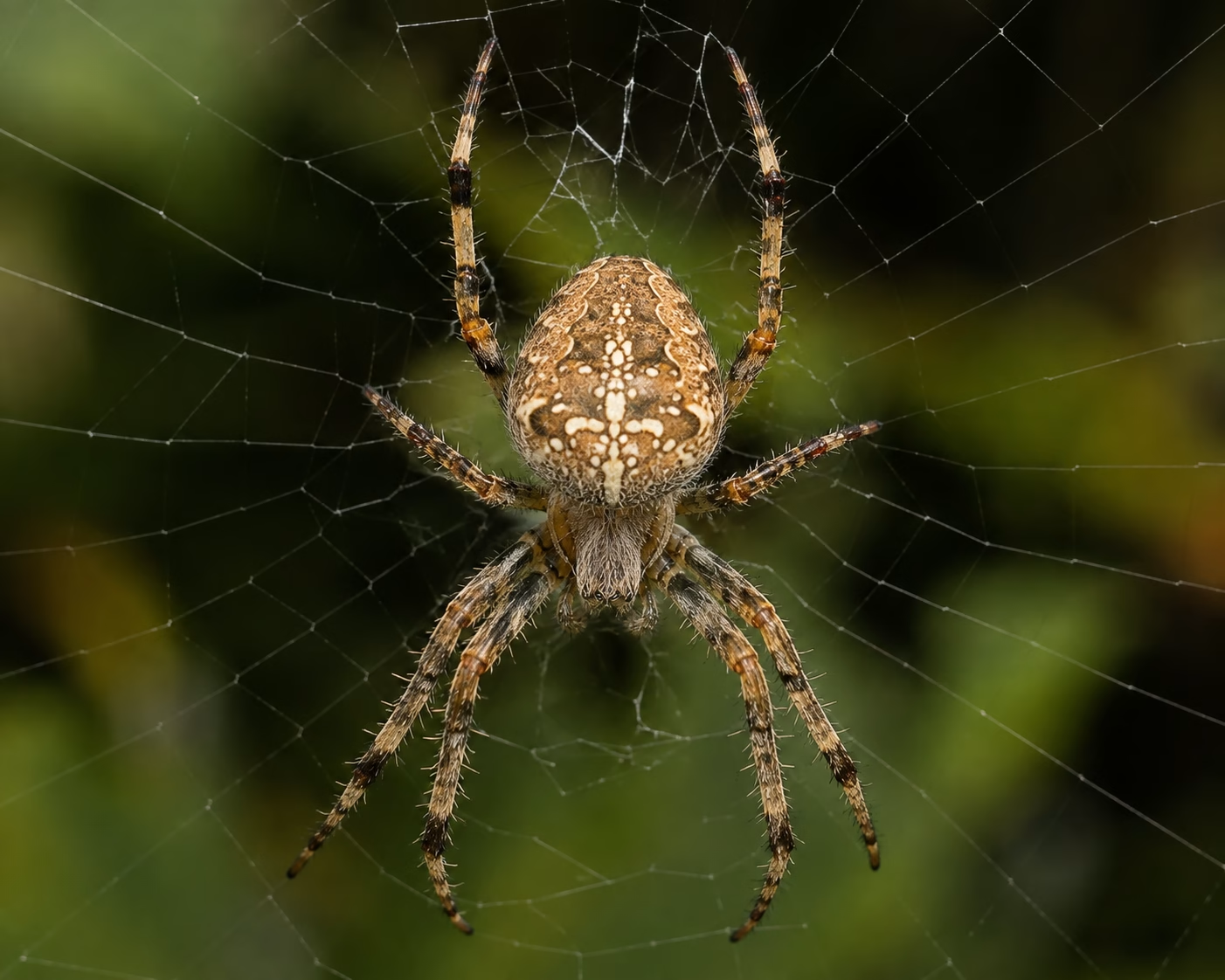
Orb weaver spiders are among the most recognizable garden spiders in North America, known for their large wheel-shaped webs and bold body markings. Despite their size and striking colors, most people struggle to name the exact species they’re looking at. Florida’s warm, humid climate and abundant insect life make it prime territory for several orb weaver species, so knowing what to look for is especially useful for gardeners and homeowners across the state.
This guide breaks down the key identification features, body shape, color patterns, web design, and habitat clues, that help you confidently identify an orb weaver spider in Florida and tell it apart from other common backyard spiders.
What Is an Orb Weaver Spider?
Orb weaver spiders belong to the family Araneidae, one of the largest spider families in the world with more than 3000 known species spread across nearly every continent. They get their name from the wheel-shaped “orb” webs they spin, a structure built from spiral threads connected to straight spokes radiating out from a central hub. This design is highly effective at catching flying insects such as moths, flies, beetles, and mosquitoes that blunder into the sticky silk, prey that Florida’s warm, humid conditions keep in steady supply.
Most orb weavers are non-aggressive by nature and prefer to stay anchored on their web rather than roam across yards or homes. Unlike hunting spiders, they rely on their web to do the work, waiting patiently at the center or along an edge until prey becomes trapped.
One of their most notable habits is nightly web rebuilding. Orb weavers often eat the old silk to recycle its proteins before spinning a fresh web at dusk, ready for a new night of hunting. This daily rebuilding pattern, paired with the wheel-shaped design, is one of the clearest behavioral signs confirming you’re looking at an orb weaver rather than another web-building spider species.
Common Orb Weaver Spider Species and Their Markings
Different orb weaver species carry distinct colors and patterns. Knowing the common types found in yards and gardens speeds up identification, and several of these species are especially familiar sights in Florida.
| Species | Common Name | Key Markings | Typical Size |
| Argiope aurantia | Black and Yellow Garden Spider | Bold black and yellow abdomen pattern | 0.75 to 1.1 inches (females) |
| Araneus diadematus | European Garden Spider | Cross-shaped white markings on brown or orange body | 0.5 to 0.75 inches |
| Neoscona crucifera | Spotted Orb Weaver | Reddish brown body with dark spotted pattern | 0.5 to 0.8 inches |
| Gasteracantha cancriformis | Spiny Orb Weaver | Hard spiky abdomen in white, yellow, or red | 0.3 to 0.4 inches |
| Micrathena gracilis | Spined Micrathena | Black and white angular abdomen with spines | 0.3 to 0.4 inches |
Females are almost always larger and more colorful than males. Males tend to be small, plain, and rarely seen on the web itself since they mostly wander in search of mates. The spiny orb weaver in particular is a common and easily recognizable sight in Florida gardens, often strung between shrubs or porch railings.
Physical Features That Set Orb Weavers Apart
Orb weaver spiders share a few structural traits that separate them from other spider families. Look for these features when identifying a specimen.
Round or Oval Abdomen
Orb weavers typically have a large, rigid abdomen that looks noticeably rounder and bulkier than the slim bodies seen on wolf spiders or jumping spiders. This shape helps store energy and eggs, and it’s often the first visual clue people notice.
Eight Eyes in Two Rows
Like most web-building spiders, orb weavers have eight eyes arranged in two horizontal rows. This eye pattern helps distinguish them from hunting spiders, which often have eyes grouped in three rows for better depth perception while chasing prey.
Long Thin Legs With Spines
Their legs are long, thin, and lined with small spines. This structure is built for gripping silk threads securely rather than for speed, which is why orb weavers move slowly and deliberately across their web instead of darting around like ground-hunting spiders.
Bright or Patterned Coloring
Many species display bold yellow, orange, white, or spiky textured abdomens. These patterns aren’t just decorative, they can help with camouflage, temperature regulation, or even deterring predators like birds.
No Venom Danger to Humans
Orb weaver fangs are usually too short or too weak to break human skin. Their venom is designed for subduing small insects, not mammals, which makes them harmless in nearly all everyday encounters.
Body size alone should not be the only identifier since juveniles look very different from adults. Pattern and web shape give more reliable clues when confirming an orb weaver spider.
Orb Weaver Web Patterns and Where to Find Them
The web is often the fastest way to confirm an orb weaver identification. These spiders build nearly perfect circular webs, with a spiral pattern radiating out evenly from a central hub, unlike the messy tangled webs spun by cobweb spiders.
Key web traits include:
- A wheel-like structure with evenly spaced spiral threads connected to straight spoke lines
- A zigzag silk band called a stabilimentum, seen in some species like Argiope aurantia
- Webs placed between plants, fence posts, porch corners, or tall grass
- Fresh webs built each evening, older silk is often eaten and recycled for nutrients
- Sticky capture threads mixed with non-sticky support lines for structural strength
Orb weavers usually build webs in open areas that catch flying insects, such as garden edges, tree branches, shrub lines, and outdoor light fixtures where moths and beetles gather at night, a pattern that plays out often around Florida porches and lanais where evening lighting draws steady insect traffic. Webs are almost always positioned vertically and at a height that intercepts flying insect traffic, rather than low to the ground like funnel-web spiders prefer.
Spotting a large, symmetrical, wheel-shaped web is often enough on its own to confirm an orb weaver is nearby, even before seeing the spider itself.
Orb Weaver vs Other Common Spiders: Key Differences
People often confuse orb weavers with other backyard spiders. A side by side comparison makes identification easier.
| Feature | Orb Weaver | Wolf Spider | Jumping Spider |
| Web type | Circular orb web | No web, hunts on ground | No web, stalks prey |
| Body shape | Round large abdomen | Hairy, robust body | Compact, short legs |
| Movement | Stays on web | Fast ground runner | Short jumping bursts |
| Eye pattern | Two rows of eight | Three rows of eight | Large front pair visible |
| Typical location | Gardens, eaves, fences | Ground cover, leaf litter | Walls, window frames |
This comparison highlights why web presence is often the single strongest clue. If a spider is sitting motionless in the center of a large round web, it is very likely an orb weaver, and in Florida that web is just as likely to be strung across a garden path or lanai screen as a tree line.
Are Orb Weaver Spiders Dangerous to Humans?
Orb weaver spiders are not considered medically significant to humans. Their venom is designed to subdue small insects, not mammals, which means it has little to no effect on human tissue in most cases. A bite is rare and usually only happens if the spider is handled directly, pressed against skin, or accidentally trapped inside clothing.
If a bite does occur, symptoms are typically mild and short-lived:
- Slight redness or swelling at the bite site
- Minor itching or localized pain similar to a mosquito bite
- Mild warmth around the affected area
- Symptoms usually resolve within a day or two without treatment
Severe reactions are uncommon but can happen in people with spider bite allergies or sensitive skin conditions. In these rare cases, swelling may spread beyond the immediate bite area.
Anyone experiencing swelling beyond the bite site, difficulty breathing, dizziness, or a rapid heartbeat should seek medical attention right away. For most people though, an orb weaver bite is a minor, forgettable incident that heals on its own without any lasting effects or complications.
Orb Weaver Habitat and Seasonal Behavior
Orb weavers are most active from late summer through early fall, when populations peak and their webs become far more noticeable around homes and gardens. They favor humid outdoor spaces with steady insect traffic, since more prey means faster growth and better odds of survival, conditions Florida offers for a large part of the year.
Common habitats include:
- Garden shrubs and flower beds
- Tree lines and wooded edges
- Porch corners and deck railings
- Tall grass and open field edges
- Areas near outdoor lighting where insects gather at night
As temperatures drop in late fall, adult orb weavers typically die off shortly after laying their egg sacs. These sacs are built to withstand freezing conditions and overwinter safely, often tucked into bark crevices or dense foliage. They hatch the following spring, restarting the life cycle from scratch, and in Florida’s milder winters this seasonal decline tends to be less abrupt than in colder regions.
This seasonal pattern explains why orb weaver sightings spike dramatically in September and October across much of the United States, including Florida. What looks like a sudden spider surge is really just adults reaching full size right before the end of their yearly life cycle.
How to Safely Remove or Relocate an Orb Weaver
Most orb weavers are harmless and beneficial, they control mosquito and fly populations naturally, a role that carries real value in Florida given how persistent mosquitoes are in the state. Removal is usually a matter of preference rather than safety.
Step 1: Avoid Direct Contact
Use a broom handle or stick to gently guide the spider rather than touching it with bare hands. This keeps both you and the spider safe while avoiding any unnecessary stress to the animal.
Step 2: Relocate Instead of Killing
Place the spider in a jar or container and release it into a garden bed away from doorways and high traffic areas. Relocating preserves the natural pest control benefits orb weavers provide outdoors.
Step 3: Remove Webs in High Traffic Areas
Sweep away webs near entryways or walkways with a long-handled broom instead of using pesticide spray. This clears the immediate path without harming the spider or surrounding plants.
Step 4: Trim Back Vegetation Near Entryways
Cutting back shrubs, vines, and overgrown plants near doors and windows removes ideal web-building spots. Fewer anchor points near the home means fewer webs to deal with over time.
Step 5: Reduce Outdoor Lighting Near Doors
Bright lights attract insects at night, and insects in turn attract orb weavers looking for an easy meal. Switching to motion-activated lighting or dimmer bulbs near entrances can reduce both insect and spider activity, which is especially useful around Florida porches and lanais.
Killing orb weavers is rarely necessary since they pose little risk to humans and actively help reduce nuisance insect populations around the home.
When to Call a Pest Control Professional
Most orb weaver situations do not require professional help, since these spiders are harmless and tend to resolve on their own once the season changes. However, some cases call for expert support beyond basic removal steps.
Consider contacting a licensed Florida pest control provider if:
- Large numbers of webs appear repeatedly despite regular removal efforts
- A household member has a known spider bite allergy or sensitive skin condition
- Spiders are nesting inside the home rather than staying outdoors
- Identification is uncertain and a venomous species is suspected instead
- Webs keep appearing in the same spot even after trimming nearby vegetation
A local pest control technician can confirm the exact species, assess the overall infestation level, and recommend safe treatment options tailored to your property and Florida’s climate. They can also identify conducive conditions, such as excess moisture or heavy insect activity, that may be drawing spiders toward your home in the first place.
In most cases though, a professional visit is simply about peace of mind rather than genuine danger. Orb weavers remain one of the least concerning spiders to find around a house, and a quick inspection is usually all that’s needed to confirm there’s nothing to worry about.
Final Thoughts
Orb weaver spiders look intimidating because of their size and bold patterns, but they are some of the most beneficial garden spiders you can host outdoors, and in Florida their pest control role is especially valuable given the state’s year-round insect activity. Their circular webs, seasonal behavior and non-aggressive nature make them fairly simple to identify once you know what to look for.
Focus on web shape, abdomen pattern, and habitat to separate orb weavers from other common spider species. In most cases, the best approach is simply to observe and let them do their job controlling backyard insects naturally.
FAQs
How Can I Tell If A Spider Is An Orb Weaver?
Look for a large round web with spiral threads and a spider sitting at the center or edge. Orb weavers typically have round abdomens with bold color patterns.
Are Orb Weaver Spiders Poisonous?
No. Orb weavers carry mild venom meant for insects and pose no significant danger to humans or pets.
What Is The Biggest Orb Weaver Spider In The Us?
The black and yellow garden spider (Argiope aurantia) is among the largest, with females reaching over one inch in body length, and this species is commonly found throughout Florida.
Why Do Orb Weavers Build A New Web Every Day?
Fresh silk is stickier and more effective at catching prey. Orb weavers often eat the old web to recycle proteins before rebuilding.
Do Orb Weaver Spiders Bite Humans?
Bites are rare and only occur when the spider is handled or trapped against skin. Symptoms are usually mild and short-lived.
What Time Of Year Are Orb Weavers Most Common In Florida?
Sightings peak in late summer through early fall, typically August through October, when adult spiders reach full size, though Florida’s mild climate can keep some activity going a bit longer than in colder states.
Are Orb Weaver Spiders Good To Have Around?
Yes. They help control mosquitoes, flies, and other flying insects naturally without pesticides, which is a real benefit in Florida’s mosquito-heavy climate.
What Is The Zigzag Pattern In Some Orb Weaver Webs?
This is called a stabilimentum. Researchers believe it may help stabilize the web, attract prey, or deter birds from flying into it.
How Do I Get Rid Of Orb Weaver Webs Without Harming The Spider?
Gently relocate the spider with a jar or stick, then sweep the empty web away with a long-handled broom.
Should I Call An Exterminator For Orb Weaver Spiders?
Usually not. Professional help is only needed for large repeated infestations, known allergies, or uncertain identification involving a possibly venomous species.