
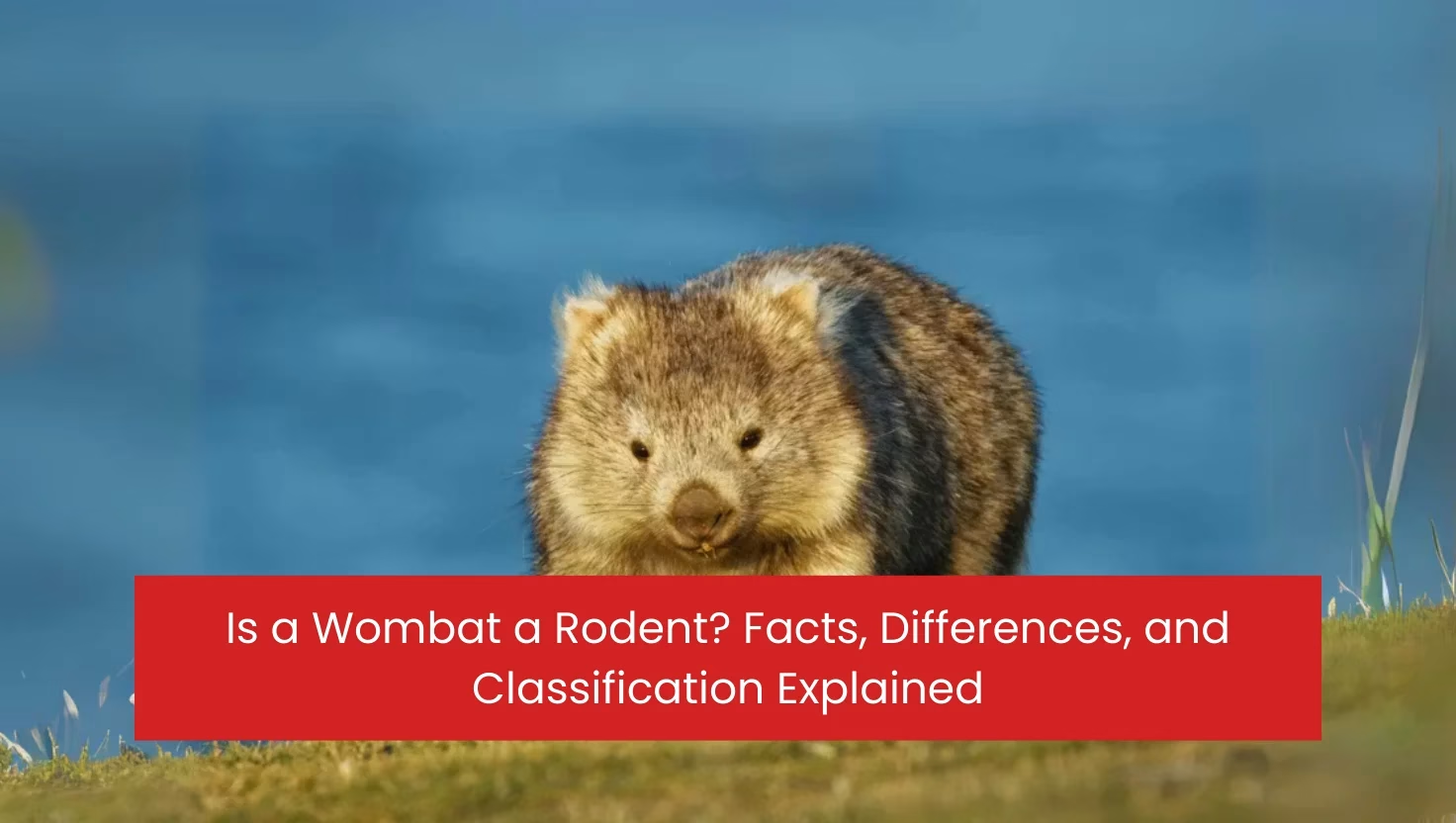
Wombats are sturdy, short-legged animals native to Australia, often described as looking like oversized rodents. Because of their stocky bodies, burrowing habits, and gnawing behavior, many people assume wombats belong to the rodent family. However, this assumption is incorrect. This article clearly answers whether a wombat is a rodent and explains the biological and evolutionary differences that set wombats apart. Wombats are actually marsupials, more closely related to koalas and kangaroos than to rodents. They possess a pouch for carrying their young and have unique skeletal and dental structures that distinguish them from true rodents.
What Is a Wombat?
A wombat is a medium-sized, herbivorous mammal native exclusively to Australia. Wombats are known for their compact bodies, strong claws, and powerful digging abilities. They live in extensive burrow systems and primarily feed on grasses, roots, and bark. Wombats are mostly nocturnal, solitary animals and can live up to 15–20 years in the wild. Despite their calm appearance, they are extremely strong and well adapted to their environment. Wombats also have a unique backward-facing pouch, which prevents dirt from entering while digging. Their cube-shaped feces help mark territory and communicate with other wombats.
Is a Wombat a Rodent?
No, a wombat is not a rodent. Although wombats share some physical similarities with rodents, such as a robust body shape and gnawing behavior, they belong to a completely different animal group. Wombats are classified as marsupials, not rodents, meaning they reproduce and develop in a fundamentally different way. Wombats give birth to underdeveloped young that continue to grow in a pouch, a key trait of marsupials. Additionally, their teeth, digestive system, and evolutionary lineage are distinct from rodents, further confirming that wombats are not part of the rodent family.
What Makes Wombats Different From Rodents?
1. Wombats Are Marsupials, Not Rodents
Wombats belong to the marsupial group, which includes kangaroos and koalas. Marsupials give birth to underdeveloped young that grow inside a protective pouch. Rodents do not have pouches or marsupial reproduction. This difference places wombats in a separate mammal category. Marsupials evolved mainly in Australia. Wombats’ classification highlights their distinct biology. This classification is widely supported by scientific research.
2. Differences in Reproduction
Rodents give birth to relatively developed young after a gestation period of several weeks. Wombats give birth to tiny, undeveloped joeys that crawl into the mother’s pouch. The pouch provides warmth, nutrition, and safety for several months. This reproductive method increases survival rates. Rodents do not rely on pouch-based development. Wombat reproduction reflects a slow, protective life cycle. This method ensures higher survival rates in harsh environments.
Also Like: Are Bats Rodents
3. Teeth Structure Comparison
Rodents have continuously growing front incisors used for gnawing. Wombat teeth also grow but differ in structure. Their molars are designed for grinding tough vegetation. Jaw movement in wombats is slower and more powerful. Rodents rely on sharp cutting teeth. Teeth differences show clear evolutionary adaptations for distinct diets. Wombat teeth allow them to chew coarse grasses efficiently.
4. Body Size and Strength
Wombats are much larger and stronger than most rodents. Adult wombats can weigh up to 35 kilograms, with dense, muscular bodies built for digging and defense. Rodents are generally smaller and lighter. Wombats have thick bones and strong limbs for burrowing. Their compact bodies give them stability and resilience. Body differences reflect adaptations to specific survival strategies. Their size and strength also help protect them from predators.
Must Read: Are Mice Rodents
5. Digestive System Differences
Wombats have a slow, highly efficient digestive system for extracting nutrients from fibrous plants. Food can take several days to digest, conserving energy. Rodents digest food much faster. Wombats’ system supports survival on tough grasses. Their intestines are specialized for fermenting cellulose. Digestive differences highlight significant physiological divergence. This system allows wombats to survive in low-nutrient environments.
6. Habitat and Burrowing Style
Both wombats and rodents dig burrows for shelter. Wombat burrows are large, complex tunnels protecting against predators and extreme weather. Some burrows extend over 30 meters and last generations. Rodent burrows are smaller and simpler. Multiple entrances in wombat burrows allow quick escape. Burrow adaptations show differences in lifestyle and ecological roles. Burrows also provide stable temperature and humidity conditions for wombats.
Helpful For You: Is a Hamster a rodent
7. Lifespan and Growth Rate
Wombats grow slowly over several years and live 15 to 20 years. Rodents mature quickly and have shorter lifespans. Slow growth allows wombats to develop strong bones and muscles. Rapid growth in rodents supports population survival. Longevity helps wombats defend territories. Lifespan and growth reflect evolutionary trade-offs between strength and reproduction. Longer lifespan also allows wombats to maintain and defend burrows effectively.
8. Behavior and Social Habits
Wombats are mostly solitary and territorial. They mark their territory with scent and droppings. Rodents often live in social groups or colonies for protection and resources. Wombats interact mainly during mating. Rodents rely on group cooperation. Behavioral differences clearly distinguish wombats from rodents. Solitary behavior reduces competition for food and space among wombats.
Also Read: Are Guinea pigs rodents
9. Geographic Distribution
Wombats are native exclusively to Australia, living in forests, grasslands, and mountains. Rodents are widespread, found on nearly every continent. Wombats’ distribution is limited and habitat-dependent. Rodents are highly adaptable and can live in urban and wild areas. Wombats occupy specific ecological niches. Geographic differences highlight ecological and evolutionary divergence. Limited distribution makes wombats more vulnerable to habitat loss.
10. Evolutionary History
Wombats and rodents evolved along separate paths over millions of years. They are not closely related genetically. Convergent evolution caused similar traits in response to comparable environments. Fossil evidence confirms their distinct lineages. Modern classification separates the two groups. Evolutionary history shows similarities are superficial. These differences emphasize how adaptation shapes unrelated species differently.
Must Read: Are Skunk Rodents
Why Are Wombats Often Mistaken for Rodents?
Wombats are often mistaken for rodents due to their low-slung bodies, strong teeth, and burrowing behavior. Their habit of chewing tough vegetation also contributes to the confusion. Additionally, limited public knowledge about marsupials leads many people to group wombats with rodents based on appearance alone. Wombats, however, are true marsupials and carry their young in pouches, distinguishing them clearly from rodents.
Fun Facts About Wombats
- Wombats produce cube-shaped droppings
- They have a backward-facing pouch to keep dirt out while digging
- Wombats can run up to 40 km/h over short distances
- Their rear end is reinforced with cartilage for defense against predators
You may also like:
- Are Hyraxes Rodents?
- Are Otters Rodents?
- Is a Raccoon a Rodent
- Is a Ferret a Rodent
- Is a Hamster a Rodent
- Are possums Rodents
- Is a Sugar Glider a Rodent?
Conclusion
Despite their rodent-like appearance, wombats are not rodents. They are unique marsupials with distinct reproductive systems, anatomy, and evolutionary histories. Understanding these differences helps clear common misconceptions and highlights the remarkable diversity of mammals found in Australia. Wombats’ specialized adaptations, including burrowing behavior and slow digestion, make them particularly fascinating to study. Learning about wombats also emphasizes the importance of conserving their habitats for future generations. These marsupials are a great example of how evolution creates diverse solutions for survival.
FAQs
Are wombats related to rats or beavers?
No, wombats are not related to rats or beavers. They are marsupials, while rats and beavers are rodents.
Do wombats chew like rodents?
Wombats do chew frequently, but their teeth and chewing mechanics differ from those of rodents.
Are wombats aggressive?
Wombats are generally calm but can become aggressive if threatened.
Can wombats be kept as pets?
No, wombats are protected wild animals and cannot be kept as pets.
Why are wombats sometimes mistaken for rodents?
Wombats are mistaken for rodents because of their stocky bodies and burrowing habits, but they are actually marsupials, not rodents.