
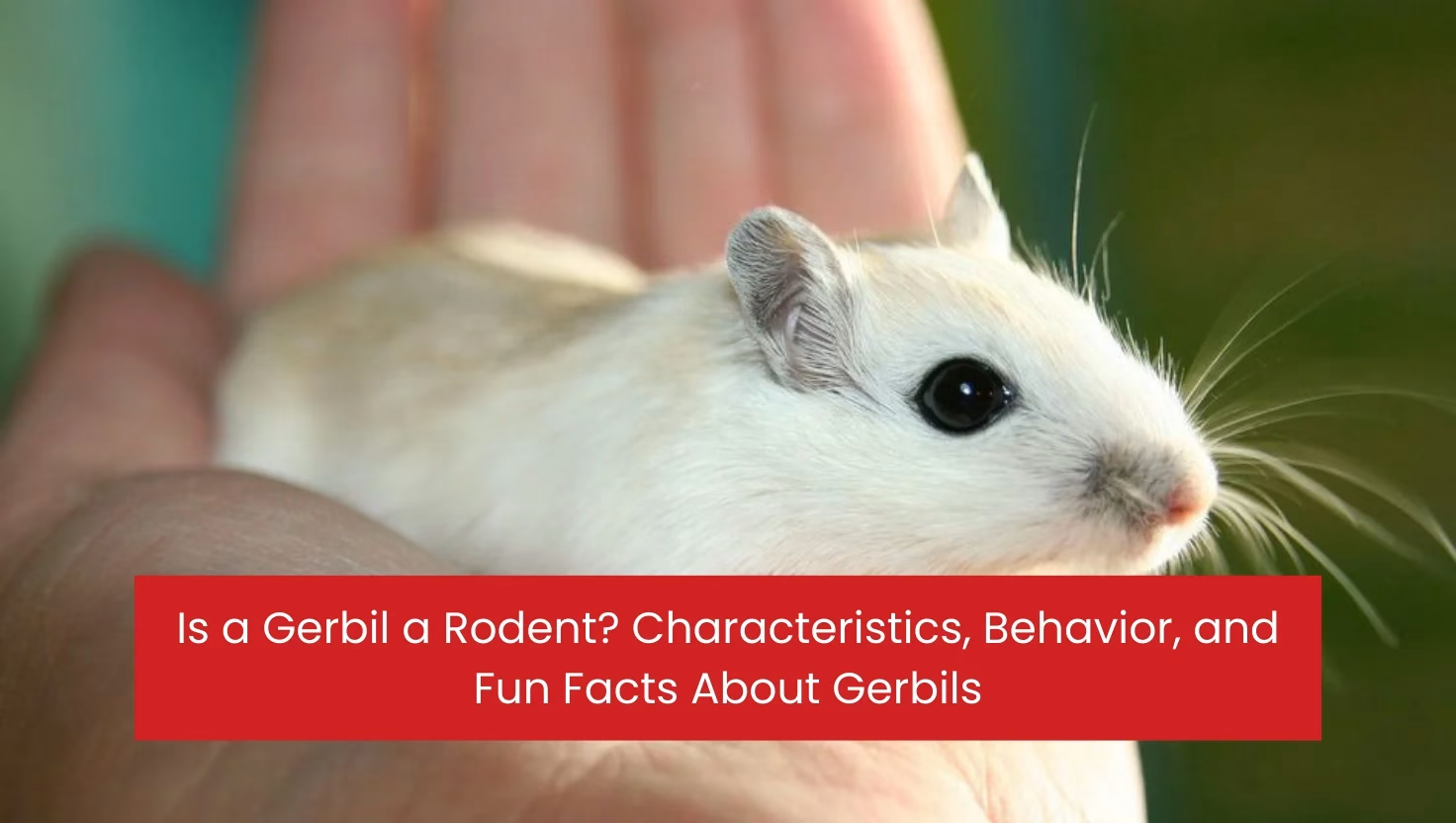
Gerbils are small, active mammals commonly kept as pets but also found in deserts and grasslands across Africa, the Middle East, and Asia. Often mistaken for mice or hamsters, gerbils belong to the rodent family and exhibit unique adaptations for survival in arid environments. They play an important ecological role by burrowing, dispersing seeds, and serving as prey for predators. Understanding gerbils highlights their behavior, physiology, and ecological significance, both in the wild and in captivity. Their remarkable agility, social nature, and adaptability make them fascinating rodents to study and care for.
What Are Gerbils?
Gerbils are small rodents belonging to the family Muridae, which also includes mice, rats, and hamsters. They have long tails, strong hind legs, and compact bodies adapted for digging and jumping. Gerbils are social, burrowing animals that thrive in desert or semi-arid habitats where they feed on seeds, plants, and insects. Their burrows provide shelter from predators and extreme temperatures. These traits, combined with their energetic and inquisitive nature, confirm their classification as rodents and highlight their specialized survival adaptations in arid environments.
Are Gerbils Rodents?
Yes, gerbils are true rodents. They belong to the order Rodentia, characterized by continuously growing incisors that require constant gnawing. Like other rodents, gerbils have strong teeth for gnawing seeds, roots, and vegetation, as well as burrowing adaptations that allow them to live in colonies and avoid predators. Their classification within Rodentia is supported by their skeletal structure, dentition, and reproductive traits. Gerbils’ rodent characteristics, combined with their unique desert adaptations, make them both typical and specialized members of the rodent family.
Rodent Control Services Florida
What Makes Gerbils Different from Other Rodents
1. Body Size and Shape
Gerbils have small, elongated bodies with strong hind legs and long tails that aid in balance during jumping and climbing. Unlike some rodents that rely mainly on running, gerbils are exceptional jumpers and burrowers. Their streamlined bodies allow efficient movement through sandy or grassy terrain while escaping predators or navigating tunnels. This body design also helps conserve energy during long foraging trips in hot, arid environments, improving survival and reproductive success.
2. Fur and Coloration
Gerbils have dense fur that varies from sandy, brown, or gray in the wild to a wide range of colors in domesticated varieties. Their fur provides insulation against cold desert nights and camouflage against the sandy terrain. This adaptation is essential for avoiding predators in open habitats where natural cover is limited. Fur coloration also helps regulate body temperature and protect the skin from ultraviolet rays in bright, exposed desert environments.
Must Read: Are Bats Rodents
3. Teeth Structure
Gerbils have two upper and two lower incisors that grow continuously throughout their lives, like all rodents. Their strong teeth allow them to gnaw seeds, roots, and tough plant material, preventing overgrowth. This dental structure is crucial for survival in the wild, where food includes hard seeds and fibrous vegetation. Constant gnawing maintains proper tooth length and enables efficient nutrient extraction, ensuring healthy growth and energy for burrowing and social activities.
4. Limb Structure
Gerbils have strong hind limbs and smaller forelimbs, perfect for digging and jumping. This allows them to escape predators quickly and create extensive burrow systems. Unlike some rodents that rely on climbing or running, gerbils specialize in vertical and horizontal jumping for both foraging and protection. Their limb strength also supports rapid burrow excavation, allowing access to deeper soil layers for shelter and stable temperature control.
Also Read: Are Squirrels Rodents
5. Burrowing Behavior
Gerbils dig complex burrows with multiple chambers for nesting, food storage, and shelter. These burrows provide protection from predators and harsh environmental conditions. Their burrow systems also help aerate the soil and create microhabitats for other small animals and insects, contributing to ecosystem health. Burrowing behavior enhances social interaction, as gerbils coordinate tunnels with partners or group members while maintaining territorial boundaries.
6. Diet
Gerbils are omnivorous, feeding primarily on seeds, roots, grasses, and occasionally insects. Their diet helps maintain plant populations and provides energy for digging and social interactions. In captivity, they thrive on a balanced diet of seeds, pellets, and fresh vegetables, reflecting their flexible feeding habits. Dietary adaptability allows gerbils to survive in fluctuating desert conditions, ensuring they can meet nutritional needs year-round.
7. Reproductive Strategy
Gerbils reproduce rapidly, with females capable of multiple litters per year, each containing 3–8 young. This high reproductive rate ensures population survival despite predation or environmental challenges. Young gerbils mature quickly and are independent within weeks, allowing populations to expand in favorable conditions. Rapid reproduction combined with parental care increases the survival rate of offspring, ensuring the species’ continuity in challenging habitats.
Helpful For You: Is a beaver a rodent
8. Social Behavior
Gerbils are social animals, living in pairs or colonies in the wild. They communicate using scent, vocalizations, and body movements to maintain group cohesion and defend territories. Their social structure reduces stress and helps maintain safety within burrows while promoting cooperative foraging and predator alerting. Social bonds also enhance learning, as younger gerbils observe older individuals to acquire survival skills.
9. Geographic Distribution
Wild gerbils are native to deserts and grasslands of Africa, the Middle East, and Asia. They thrive in arid or semi-arid habitats, unlike rodents that inhabit nearly every terrestrial environment worldwide. Their range is determined by the availability of food, burrowable soil, and climate conditions. Some species have adapted to highly specific environments, making them sensitive indicators of desert ecosystem health and climate changes.
Also like: Are Hedgehogs Rodent
10. Lifespan and Population
Gerbils live 2–4 years in the wild and up to 5–8 years in captivity. Populations fluctuate depending on food availability, predation, and environmental factors. Their rapid reproduction ensures population stability, and in pet environments, gerbils maintain strong social bonds and active behaviors even without natural predators. Population dynamics are influenced by environmental stressors, predation, and habitat conditions, reflecting their adaptability and resilience in both wild and domestic settings.
Fun Facts About Gerbils
- Gerbils have long tails that help them balance while jumping or running.
- They are highly social and prefer living in pairs or small groups.
- Gerbils use burrows to store food, protect young, and hide from predators.
- Domesticated gerbils have been bred in a variety of fur colors and patterns.
- Wild gerbils are adapted to survive in desert climates with extreme temperatures.
- Gerbils communicate with squeaks and tail movements to warn group members.
You may also like:
- Are Otters Rodents?
- Is a Raccoon a Rodent
- Is a Ferret a Rodent
- Is a Hamster a Rodent
- Are possums Rodents
- Is a Sugar Glider a Rodent?
- Are Hyraxes Rodents?
Conclusion
Gerbils are small, active rodents with unique adaptations for survival in deserts and grasslands. Their burrowing behavior, strong teeth, social structure, and specialized limbs distinguish them from other rodents. Understanding gerbils highlights the diversity of rodent adaptations and their ecological role in seed dispersal, soil aeration, and serving as prey. Both in the wild and as pets, gerbils demonstrate remarkable behaviors and social intelligence, making them fascinating small mammals. Their adaptability and resilience also show how rodents thrive in both natural and human-influenced environments.
FAQs
Is a gerbil a rodent?
Yes, gerbils belong to the rodent family (Rodentia) and share key rodent traits like continuously growing incisors.
Where do gerbils live in the wild?
Gerbils are native to deserts and grasslands of Africa, the Middle East, and Asia.
What do gerbils eat?
Gerbils are omnivores, feeding on seeds, grasses, roots, and occasionally insects.
Do gerbils live alone or in groups?
Gerbils are social animals and typically live in pairs or small colonies in burrows.
How long do gerbils live?
Wild gerbils live 2–4 years, while pet gerbils can live up to 5–8 years with proper care.