
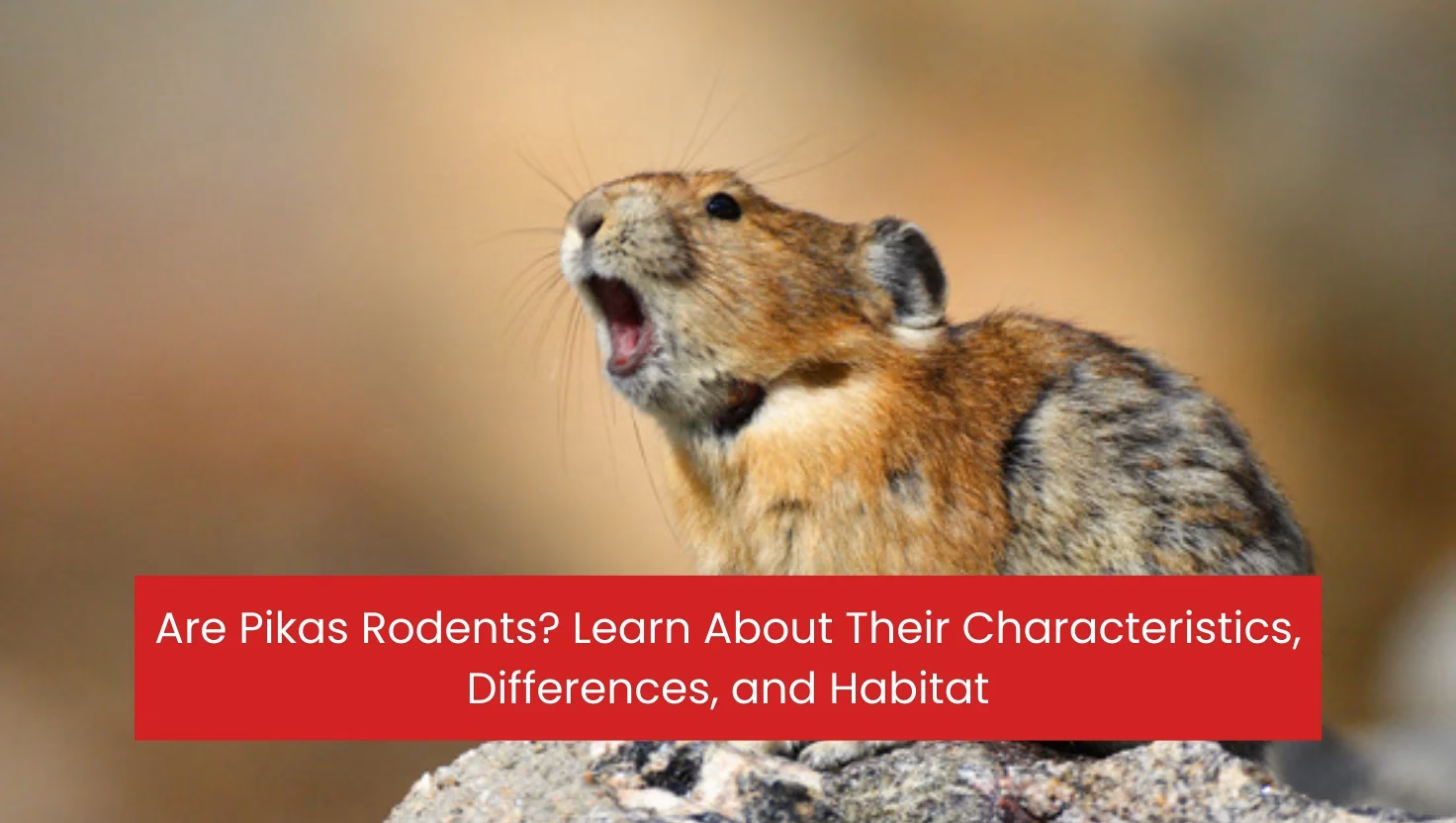
Pikas are small, herbivorous mammals that inhabit mountainous regions across North America, Europe, and Asia. Often mistaken for rodents due to their small size and appearance, they are more closely related to rabbits and hares. Pikas play a vital role in alpine ecosystems by collecting vegetation, creating hay piles for winter survival, and serving as prey for foxes, weasels, and birds of prey. Learning about pikas highlights their remarkable adaptations for cold environments and their unique ecological significance. Their ability to thrive in harsh, high-altitude habitats makes them important indicators of environmental and climate changes in mountain ecosystems.
What Are Pikas?
Pikas are small mammals belonging to the lagomorph family, which also includes rabbits and hares. They are characterized by rounded bodies, short limbs, dense fur, and no visible tails. Pikas are herbivorous and collect vegetation into hay piles to survive winter months. Their anatomy and behavior clearly separate them from rodents, even though their size and appearance can cause confusion. Pikas’ adaptations allow them to thrive in rocky, high-altitude habitats with extreme cold and limited food availability.
Are Pikas Rodents?
No, pikas are not rodents. While rodents belong to the order Rodentia and have two upper incisors, pikas belong to the lagomorph order and have four upper incisors. Their skeletal structure, digestive system, and reproductive traits also differ significantly from rodents. Despite superficial similarities in size and appearance, pikas’ evolutionary lineage, herbivorous diet, and alpine adaptations confirm that they are a distinct group of small mammals separate from rodents. Understanding this distinction helps in studying their ecology and conservation more accurately.
What Makes Pikas Different from Rodents
1. Body Shape and Size
Pikas have small, rounded bodies with short limbs and no visible tails, unlike many rodents. Their compact shape helps conserve heat in cold alpine climates and allows them to navigate rocky terrain efficiently. This body design also reduces exposure to harsh winds and helps pikas squeeze into narrow crevices for protection from predators and extreme weather. Their rounded bodies also allow them to store fat reserves during summer, which is crucial for surviving long winters when food is scarce.
2. Fur and Insulation
Pikas possess dense fur covering their entire body, including their ears, which protects them from freezing temperatures. Most rodents do not have such extensive insulation and rely on burrows for warmth. Their thick fur also provides camouflage against rocks and snow, helping them avoid predators and survive in alpine environments with highly variable seasonal conditions. The dense coat additionally enables pikas to maintain high activity levels even during freezing winter days, which is essential for haypile maintenance and survival.
Must Read: Are Possums Rodents
3. Teeth Structure
Pikas have four upper incisors and specialized molars, while rodents have only two upper incisors. This dental difference allows pikas to efficiently chew tough alpine plants. Their teeth are perfectly suited for processing fibrous vegetation, enabling them to extract maximum nutrients from grasses, herbs, and leaves, which is essential for surviving harsh winters. Continuous growth of their teeth ensures they can feed on abrasive plant material without dental issues, maintaining their health and energy levels year-round.
4. Limb Structure
Pikas have short, sturdy limbs adapted for hopping between rocks and crevices. Rodents typically have longer limbs suited for digging, climbing, or running. Pikas’ limbs provide stability and precise movement on steep slopes, rocky cliffs, and uneven terrain, allowing them to forage effectively while minimizing the risk of falls or injury in their rugged habitats. The strong limb muscles also support quick escapes from predators and agile maneuvering in tight alpine passages.
You may also like: Is a beaver a rodent
5. Diet and Food Storage
Pikas feed mainly on grasses, herbs, and leaves, and store them in hay piles for winter. Most rodents do not create organized food caches in the same way. This behavior allows pikas to survive long periods without fresh food, supports winter activity, and also influences alpine plant communities by selectively harvesting certain species, affecting local vegetation structure. Hay piles are carefully arranged and dried to prevent spoilage, demonstrating remarkable foresight and resource management uncommon among small mammals.
6. Reproductive Strategy
Pikas have small litters of 2–6 young once or twice a year, and offspring are born fully furred and active. Rodents usually reproduce more frequently with larger litters and less-developed young. This slower reproductive rate aligns with the limited food availability in alpine environments and ensures that each offspring has a higher chance of survival in harsh and competitive conditions. Parents also guard territories around haypiles, providing protection and teaching young foraging skills crucial for winter survival.
7. Social and Territorial Behavior
Pikas are territorial and use high-pitched calls to warn neighbors and defend their areas. Rodents are often social and may live in colonies or large groups. Pikas maintain clear boundaries around haypiles and burrows, which reduces competition and ensures that families have access to adequate food and shelter, supporting long-term survival in dense alpine populations. They also use scent markings and visual signals to communicate ownership, allowing for organized coexistence in crowded rocky habitats.
Also Read: Is a racoon a rodent
8. Activity Patterns
Pikas remain active year-round, including winter, relying on stored food from haypiles. Many rodents hibernate or reduce activity in colder months. This constant activity allows pikas to monitor their environment, maintain food stores, and respond quickly to predators, giving them an advantage in high-altitude environments where conditions can change rapidly. By staying active, they also prevent other animals from invading their territories or depleting their stored vegetation.
9. Geographic Distribution
Pikas are restricted to mountainous and alpine regions in North America, Europe, and Asia. Rodents inhabit nearly all terrestrial habitats worldwide. Pikas’ distribution is highly dependent on elevation, rock availability, and vegetation, which limits them to specific ecological niches, making them more sensitive to climate change and habitat disturbances compared to widespread rodents. Their restricted range also makes certain species indicators of ecosystem health, as population changes can signal environmental shifts.
Helpful For You: Lagomorphs vs Rodents
10. Lifespan and Population Dynamics
Pikas live 3–7 years and have populations closely tied to food availability and climate. Rodents often reproduce rapidly, with short lifespans and more fluctuating population numbers. Pika population sizes fluctuate seasonally and annually, and environmental changes such as snowpack, plant growth, or extreme weather can dramatically impact survival, reproduction, and overall ecosystem balance. Conservation efforts monitor pika populations because they are vulnerable to habitat loss and rising temperatures, which directly affect alpine biodiversity.
Interesting Facts About Pikas
- Pikas are herbivores and create haypiles to survive winter months.
- They are closely related to rabbits and hares, not rodents.
- Pikas communicate with high-pitched alarm calls to warn of predators.
- They are active throughout the year and do not hibernate.
- Some pika species live at elevations above 4,000 meters.
You may also like:
- Are Hyraxes Rodents?
- Are Otters Rodents?
- Is a Raccoon a Rodent
- Is a Ferret a Rodent
- Is a Hamster a Rodent
- Are possums Rodents
- Is a Sugar Glider a Rodent?
Conclusion
Pikas are unique small mammals that may look like rodents but belong to the lagomorph family. Their dense fur, short limbs, specialized teeth, haypile behavior, and alpine adaptations distinguish them clearly from rodents. Pikas play an important ecological role in mountainous regions by managing vegetation, serving as prey, and maintaining ecosystem balance. Understanding pikas highlights the diversity of adaptations among small mammals in harsh environments. Their sensitivity to climate and habitat changes also makes them important indicators for monitoring the health of alpine ecosystems.
FAQs
Are pikas rodents?
No, pikas belong to the lagomorph family, which includes rabbits and hares, not rodents.
How can you tell a pika from a rodent?
Pikas have four upper incisors, short limbs, no visible tail, dense fur, and unique alpine adaptations, unlike most rodents.
What do pikas eat?
Pikas primarily eat grasses, herbs, and leaves, which they gather and store in haypiles for winter.
Where do pikas live?
Pikas inhabit mountainous regions of North America, Europe, and Asia, preferring rocky alpine environments.
Do pikas hibernate?
No, pikas remain active year-round and rely on stored haypiles to survive cold winters.