
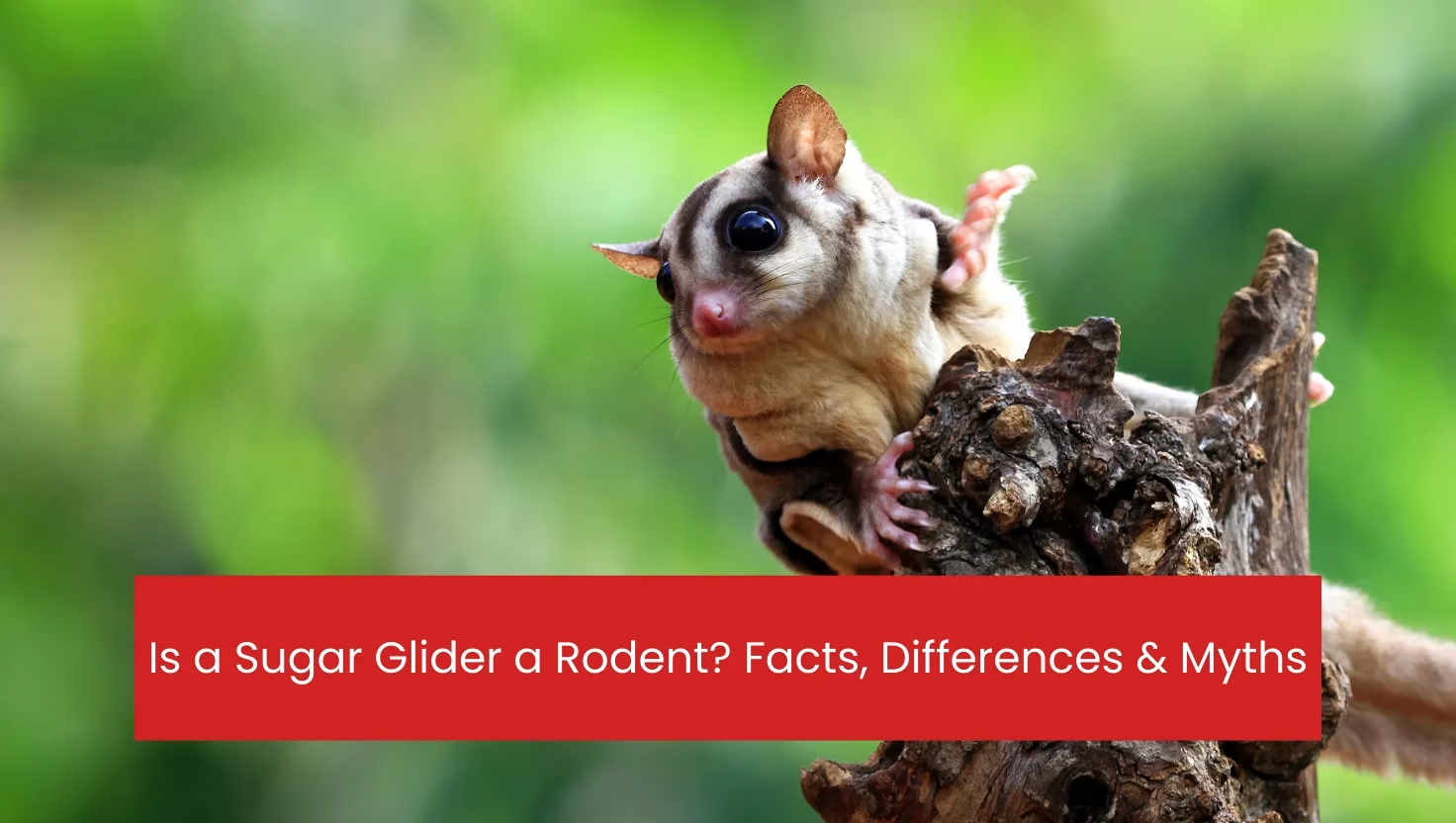
Sugar gliders are small, wide-eyed animals that look similar to squirrels or mice, which often leads people to assume they are rodents. Their size, sharp teeth, and quick movements make this confusion understandable. However, sugar gliders belong to a completely different group of mammals. Knowing their true classification helps people better understand their behavior, care needs, dietary requirements, and ecological role in the wild. In this blog, we will explain what sugar gliders are, why they are not rodents, and how they differ from true rodents in anatomy, behaviour, and social structure.
What Is a Sugar Glider?
A sugar glider is a small, tree-dwelling mammal native to Australia, New Guinea, and parts of Indonesia. It gets its name from its love of sweet foods like nectar and fruit and its ability to glide through the air using a thin membrane of skin stretching between its legs. Sugar gliders are nocturnal, meaning they are active at night, and they live in social groups in the wild. Their large eyes help them see in the dark, and their long tail helps them balance while gliding and climbing.
Are Sugar Gliders Rodents?
No, sugar gliders are not rodents. Although they may look similar to mice or squirrels, they do not belong to the rodent family. Instead, sugar gliders are marsupials, which means they carry and nurse their tiny, underdeveloped young in a pouch until they are fully grown. Rodents belong to a completely different biological order and reproduce in a more developed form without a pouch. This clear biological difference, along with their anatomy and behaviour, proves that sugar gliders are not rodents and highlights their unique evolutionary lineage.
Classification of Sugar Gliders
Sugar gliders belong to the order Diprotodontia and the family Petauridae. They are classified as marsupials, just like kangaroos and koalas. Their scientific classification places them far away from rodents on the evolutionary tree, highlighting millions of years of independent evolution. This classification explains their pouch, unique teeth, and special gliding ability. These features are not found in rodents, making sugar gliders a distinct type of mammal with specialised adaptations for tree-dwelling and nocturnal life.
Difference Between Sugar Gliders and Rodents
1. Taxonomic Group
Sugar gliders belong to the marsupial group, while rodents belong to the order Rodentia. This means they evolved separately and have different biological traits. Their classification alone shows they are not closely related, even if they look alike. This distinction helps scientists track evolutionary patterns and understand how different mammal groups adapted to their environments over time. It also explains why sugar gliders share more traits with kangaroos than with mice.
2. Closest Relatives
Sugar gliders are more closely related to animals like kangaroos and possums than to rats or mice. Rodents are related to animals such as beavers, squirrels, and guinea pigs. This difference in relatives highlights how far apart they are evolutionarily and explains many of their anatomical and behavioural distinctions. Genetic evidence confirms these relationships and explains why sugar gliders share pouch-based reproduction and other marsupial traits. These family ties strongly influence their anatomy, behaviour, diet, and survival strategies in the wild.
Must Read: How to Get Rid of Dead Rodent Odor
3. Reproductive System (Pouch vs Placenta)
Sugar gliders give birth to tiny, underdeveloped young that crawl into the mother’s pouch to continue growing and developing safely. Rodents give birth to more developed babies and do not have pouches. This is one of the strongest differences between the two groups. The pouch provides warmth, protection, and constant access to milk during early development, allowing the young to grow in a secure environment. This reproductive method allows sugar gliders to invest more care, time, and energy in fewer offspring, increasing their chances of survival in the wild.
4. Dental Structure
Rodents have continuously growing front teeth that they must gnaw on to keep short. Sugar gliders do not have these constantly growing incisors. Their teeth are adapted for eating insects, nectar, and fruit rather than gnawing hard objects like seeds or wood. This dental design reflects their specialised feeding habits and reduces the need for constant chewing on tough materials. It also lowers the risk of dental overgrowth seen in many rodents and allows sugar gliders to efficiently process soft and sugary foods essential for their energy needs.
5. Digestive System
Sugar gliders have a digestive system designed to process sweet sap, nectar, insects, and soft fruits. Rodents usually have digestive systems adapted for seeds, grains, and fibrous plant material. This difference reflects their distinct diets and feeding habits. Their stomach and intestines are better suited for sugars and protein than fibrous plant matter, allowing efficient nutrient absorption. This specialisation helps them thrive in tree-rich forest environments and maintain the energy needed for gliding, social interactions, and nocturnal activity.
You may also like: Rodent Scant identification Guide
6. Body Structure and Size
Sugar gliders have a slim body with a gliding membrane that connects their front and back legs, allowing them to soar gracefully between trees. Rodents do not have this membrane and usually have a more compact body designed for running, climbing, or burrowing. This structural difference allows sugar gliders to travel between trees without touching the ground, avoid predators, and conserve energy. Their lightweight frame supports agile movement in forest canopies, enabling them to access food sources and escape threats more efficiently than ground-dwelling animals.
7. Locomotion and Gliding Ability
Sugar gliders can glide long distances between trees by stretching their skin membrane, allowing them to move efficiently through forest canopies. Rodents cannot glide, except for a few specialised species like flying squirrels, which are still not marsupials. Gliding is a defining feature of sugar gliders and a key adaptation for their arboreal lifestyle. This ability helps them save energy, safely reach food sources high in trees, and escape predators. It also reduces time spent on the ground, lowering the risk of predation and increasing their overall survival chances in the wild.
8. Lifespan
Sugar gliders can live up to 10–15 years in captivity with proper care, while most small rodents live only 1–3 years. This significant difference affects how they reproduce, socialise, and survive in the wild. A longer lifespan allows sugar gliders to form lasting social bonds, learn complex behaviours, and develop stronger problem-solving skills. It also means they require a long-term commitment, consistent care, and attention when kept as pets to ensure their health, happiness, and overall well-being.
9. Social Behaviour
Sugar gliders are highly social animals and live in groups called colonies, where cooperation and communication are essential for survival. Rodents may live in groups or alone depending on the species, but their social structure is usually simpler than that of sugar gliders. Group living helps sugar gliders stay warm, avoid predators, share food resources efficiently, and care for their young. Strong social bonds also reduce stress, improve overall health, and increase survival rates in challenging forest environments.
Helpful For You: Is a Beaver a Rodent
10. Vocalisations and Communication
Sugar gliders use a variety of sounds, including barking, chirping, and crabbing noises, to communicate with colony members. Rodents usually make simpler squeaks and ultrasonic sounds mainly for warnings or mating. Sugar glider communication is more complex and helps maintain social order within colonies, coordinate group activities, and alert others to danger. These vocal signals also help parents locate and protect their young, strengthen social bonds, and ensure the overall cohesion and survival of the group in their natural habitat.
Why Sugar Gliders Are Often Mistaken for Rodents
Sugar gliders are often confused with rodents because of their small size, pointed faces, and sharp teeth. Their large eyes, bushy tails, and quick movements make them resemble squirrels. Many people also see them sold as exotic pets and assume they are similar to hamsters or mice, which adds to the confusion. This visual similarity, combined with limited knowledge about marsupials, leads to widespread misunderstanding about their true identity, care requirements, and unique biological traits.
Diet of Sugar Gliders
- Sugar gliders eat nectar, tree sap, insects, and fruit.
- In the wild, they lick sweet sap from trees and hunt small insects for protein.
- Rodents usually eat seeds, grains, and vegetation.
- This difference in diet shows that sugar gliders have unique nutritional needs compared to rodents.
- Their diet must be carefully balanced in captivity to avoid deficiencies and health problems.
Habitat and Natural Behavior
Sugar gliders live in forests and woodlands and spend most of their time in trees, rarely coming to the ground. They are nocturnal and sleep in nests or tree hollows during the day. Rodents, in contrast, live in a wide range of habitats, including underground burrows, homes, and open fields. Sugar gliders rely on trees and gliding to find food, escape predators, and move efficiently, while rodents rely more on running, burrowing, and hiding for survival.
Role of Sugar Gliders in the Ecosystem
Sugar gliders help pollinate flowers and disperse seeds when they feed on nectar and fruit. They also help control insect populations by eating bugs. As prey for owls, snakes, and other predators, they play an important role in the food chain. Their activities support healthy forest ecosystems and contribute to biodiversity, maintaining balance between plants, insects, and predators.
Can Sugar Gliders Be Kept as Pets?
Sugar gliders can be kept as pets in some places, but their care is complex and demanding. They need a special diet, daily social interaction, and large climbing spaces to stay healthy. They are not easy pets like rodents and can suffer if kept alone or fed incorrectly. Laws about owning sugar gliders vary by country and region, so owners should always check local regulations before adoption.
Myths and Misconceptions About Sugar Gliders
- Many people believe sugar gliders are flying squirrels, but they are not related.
- Others think they are rodents because of their small size, which is also incorrect.
- Some assume sugar gliders are low-maintenance pets, but in reality, they require specialised care, proper diet, and daily social interaction.
Conclusion
Sugar gliders are not rodents but unique marsupials with special traits like pouches and gliding membranes. Although they look similar to mice or squirrels, their biology, behaviour, and reproduction clearly set them apart. Understanding these differences helps prevent misinformation and encourages proper care and conservation. Sugar gliders are remarkable animals that highlight the diversity of mammal life on Earth and demonstrate how evolution creates many different survival strategies.
Also Read:
- Are Guinea Pigs Rodents
- Are Skunk Rodents
- Is a raccoon a Rodent
- Are Possums Rodents
- Are Otters Rodents?
FAQs
Are sugar gliders related to squirrels?
No, sugar gliders are marsupials and are not related to squirrels, which are rodents.
Do sugar gliders carry diseases like rodents?
They can carry some diseases, but they are not known to spread the same common rodent-borne illnesses.
Can sugar gliders bite?
Yes, they can bite if frightened or stressed, but they are usually gentle when properly handled.
Are sugar gliders legal everywhere?
No, laws vary by country and state, and they are illegal in some places.
How long do sugar gliders live?
With proper care, sugar gliders can live up to 10–15 years in captivity.