
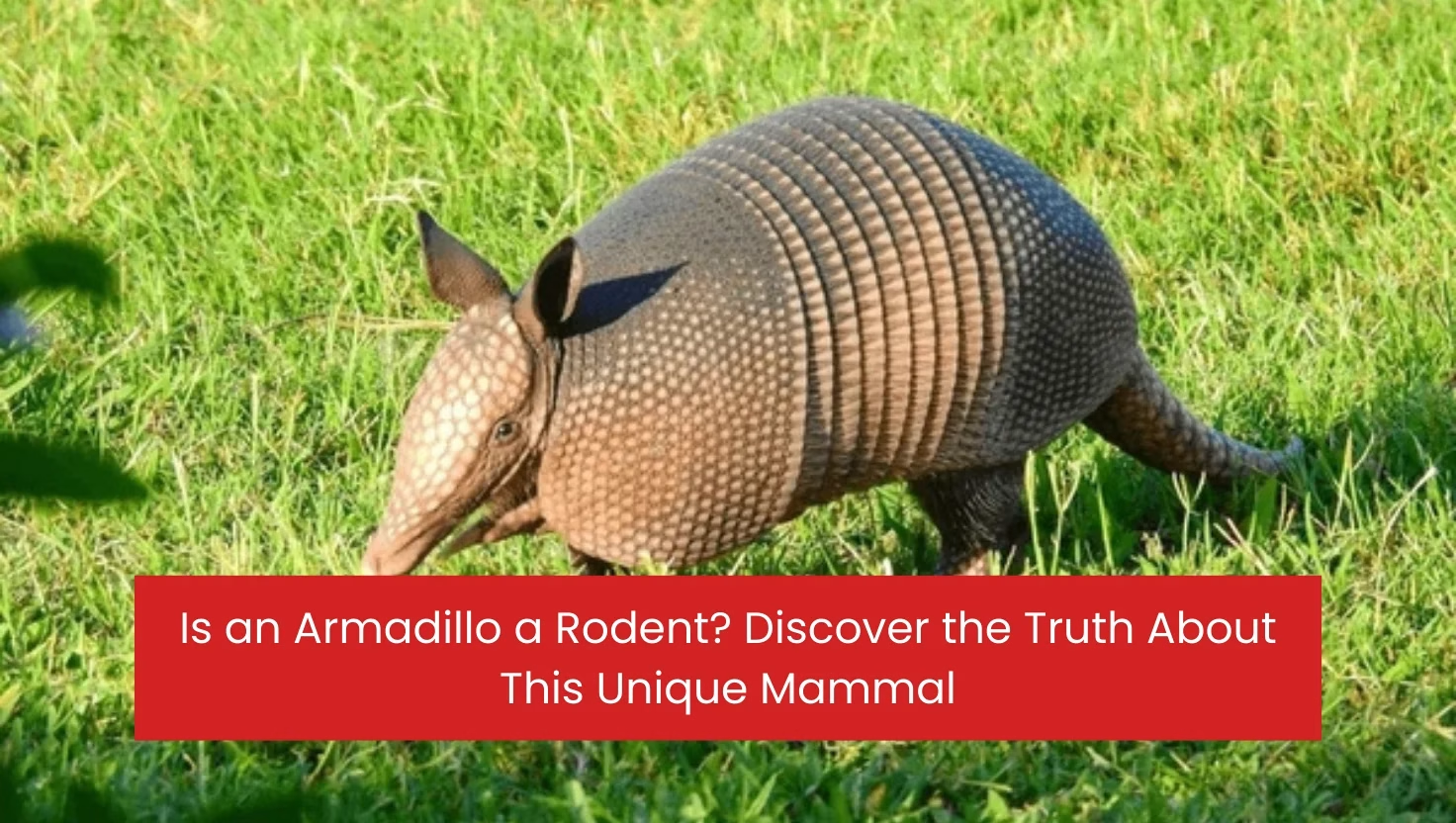
Armadillos are small, armored mammals mostly found in the Americas. Many people confuse them with rodents due to their size, claws, and digging habits. This article clarifies whether armadillos are rodents and explains their unique characteristics. Understanding these differences helps highlight the diversity of mammals in the Americas and clears common misconceptions. Armadillos have a distinctive bony shell that provides protection from predators, a feature not found in rodents. Additionally, their reproductive system, diet, and evolutionary history set them apart, making them a unique group of mammals entirely separate from rodents.
What Is an Armadillo?
Armadillos are mammals known for their hard, protective shells, which serve as a natural defense against predators. They primarily inhabit grasslands, forests, and deserts in Central and South America. Armadillos are omnivorous, feeding on insects, plants, and small invertebrates, and most species are nocturnal, using digging to find food and create burrows. Their bodies are covered with overlapping bony plates that act as armor, allowing them to survive in environments with predators and harsh weather. Armadillos also play an important ecological role by controlling insect populations and aerating the soil through their burrowing activities.
Is an Armadillo a Rodent?
No, armadillos are not rodents. They belong to a distinct mammal order called Cingulata, within the superorder Xenarthra, which also includes sloths and anteaters. Their anatomy, reproduction, and evolutionary history are completely different from rodents. Misidentification often occurs because of their small size, claws, and burrowing habits, which can superficially resemble some rodent behaviors. Armadillos’ evolutionary lineage is ancient and genetically distinct from rodents, making them one of the most unique mammal groups in the Americas.
What Makes Armadillos Different From Rodents?
1. Armadillos Are Xenarthrans, Not Rodents
Armadillos are xenarthrans, not rodents. They belong to the order Xenarthra, while rodents belong to the order Rodentia. Their skeletal and muscular systems are specifically adapted for digging and defense, and they have unique vertebral articulations not found in rodents. This classification clearly separates them and highlights their uniqueness. Armadillos’ evolutionary lineage is ancient, showing significant divergence from rodents over millions of years.
2. Differences in Reproduction
In terms of reproduction, armadillos have unique systems, including delayed implantation in some species. They give birth to fewer offspring at a time, with the nine-banded armadillo often producing identical quadruplets. Rodents reproduce rapidly and have larger litters to compensate for shorter lifespans. Armadillo young are born fully developed and able to move short distances immediately, ensuring higher survival rates. In contrast, rodents prioritize quantity over individual offspring survival, focusing on rapid population growth.
Must Read: Is a ferret a rodent
3. Body Armor and Skeleton
Armadillos are covered with a hard shell made of bone and keratin for protection, while rodents rely on speed and agility since they have no natural armor. Their skeletons are reinforced to support digging and the weight of their armor, making them much more durable than rodents. Armadillos’ body armor allows them to curl up or shield vital organs from threats, which is a clear survival strategy absent in rodents.
4. Teeth Structure Comparison
Armadillos also have distinct teeth structures. They have simple peg-like teeth without enamel, suited for crushing insects and small invertebrates. Rodents, by contrast, have continuously growing incisors adapted for gnawing wood, seeds, and plants. These differences in dentition reflect their completely separate evolutionary adaptations and specialized diets. Armadillos’ teeth allow them to efficiently process insectivorous and omnivorous diets, while rodents’ teeth are designed for generalist herbivorous feeding.
You may also like: Are mice rodents
5. Body Size and Strength
Body size and strength are also notable differences. Armadillos vary in size from small species to those over 50 cm long, and they are muscular with strong limbs for digging and burrow defense. Rodents are generally smaller, lighter, and rely more on agility than strength. Armadillos’ bodies are built to support digging and protection, while rodents cannot perform the same feats or carry heavy physical loads. These differences demonstrate distinct survival adaptations.
6. Digestive System Differences
The digestive system of armadillos is adapted to process protein-rich and fibrous insect-based food efficiently over several days. Rodents generally have faster digestion, suited for seeds, grains, and softer plant material. These physiological differences reflect their separate evolutionary strategies and dietary adaptations. Armadillos extract maximum nutrients from their omnivorous diets, which is crucial for survival in their native environments.
7. Habitat and Burrowing Style
Armadillos are known for their burrowing behavior, which is more complex than rodent tunnels. Their burrows are deep, often with multiple entrances, and provide protection, stable temperature, and humidity. Rodents build smaller, simpler nests that are more flexible in different habitats. Armadillos’ burrow design reflects adaptations to environmental pressures and predator avoidance.
Helpful For You: Are rabbits rodents
8. Lifespan and Growth Rate
In terms of lifespan and growth rate, armadillos grow slowly and can live 7–20 years depending on the species. Rodents mature quickly, reproduce early, and have shorter lifespans. The slower growth of armadillos allows them to develop strong bones, muscles, and armored bodies. This contrasts with rodents, which prioritize rapid growth to sustain populations. Lifespan and growth strategies highlight key evolutionary trade-offs.
9. Behavior and Social Habits
Behaviorally, armadillos are mostly solitary and avoid interactions except during mating, whereas some rodent species live in colonies and rely on social cooperation. Armadillos are nocturnal and defensive, using armor and burrows to avoid threats. Rodents rely on social structures for food, nesting, and protection. Solitary behavior in armadillos reduces competition for burrows and resources. These behavioral differences clearly separate them from rodents.
Also Read: Are hedgehogs rodents
10. Geographic Distribution
Finally, armadillos are native to Central and South America, with some species extending into the southern United States. Rodents, however, are found worldwide in nearly every habitat. Armadillos’ distribution is limited by climate and soil types suitable for burrowing, making them more vulnerable to habitat destruction. Rodents are highly adaptable and can thrive in diverse environments. Geographic and ecological separation emphasizes their evolutionary divergence from rodents.
Fun Facts About Armadillos
- Some species can curl up completely for protection.
- Nine-banded armadillos can jump vertically when startled.
- Armadillos have poor eyesight but an excellent sense of smell.
- They dig extensive burrows used for sleeping and raising young.
You may also like:
- Are Hyraxes Rodents?
- Are Otters Rodents?
- Is a Raccoon a Rodent
- Is a Ferret a Rodent
- Is a Hamster a Rodent
- Are possums Rodents
- Is a Sugar Glider a Rodent?
Conclusion
Despite their small size and digging habits, armadillos are not rodents. They are unique xenarthrans with distinct body armor, teeth, and reproductive systems. Understanding these differences clears common misconceptions and highlights the diversity of mammals in the Americas. Armadillos’ adaptations, including burrowing and specialized diets, make them fascinating to study. Learning about them also emphasizes the importance of conserving their habitats. These mammals demonstrate how evolution produces highly specialized and unique traits.
FAQs
Are armadillos related to rodents?
No, armadillos belong to the order Xenarthra, making them closer to sloths and anteaters than to rodents.
Why are armadillos sometimes mistaken for rodents?
Armadillos are often confused with rodents because of their size, claws, and digging habits, but they are a separate mammal group.
Can armadillos roll into a ball?
Only some species, like the three-banded armadillo, can curl completely for protection.
Can armadillos swim?
Yes, some armadillo species can swim by holding their breath and either walking along the bottom of rivers or floating across water using their buoyant shells.
What do armadillos eat?
Armadillos are omnivores, primarily eating insects, grubs, small invertebrates, plants, and occasionally fruits. Their diet depends on availability in their habitat.