
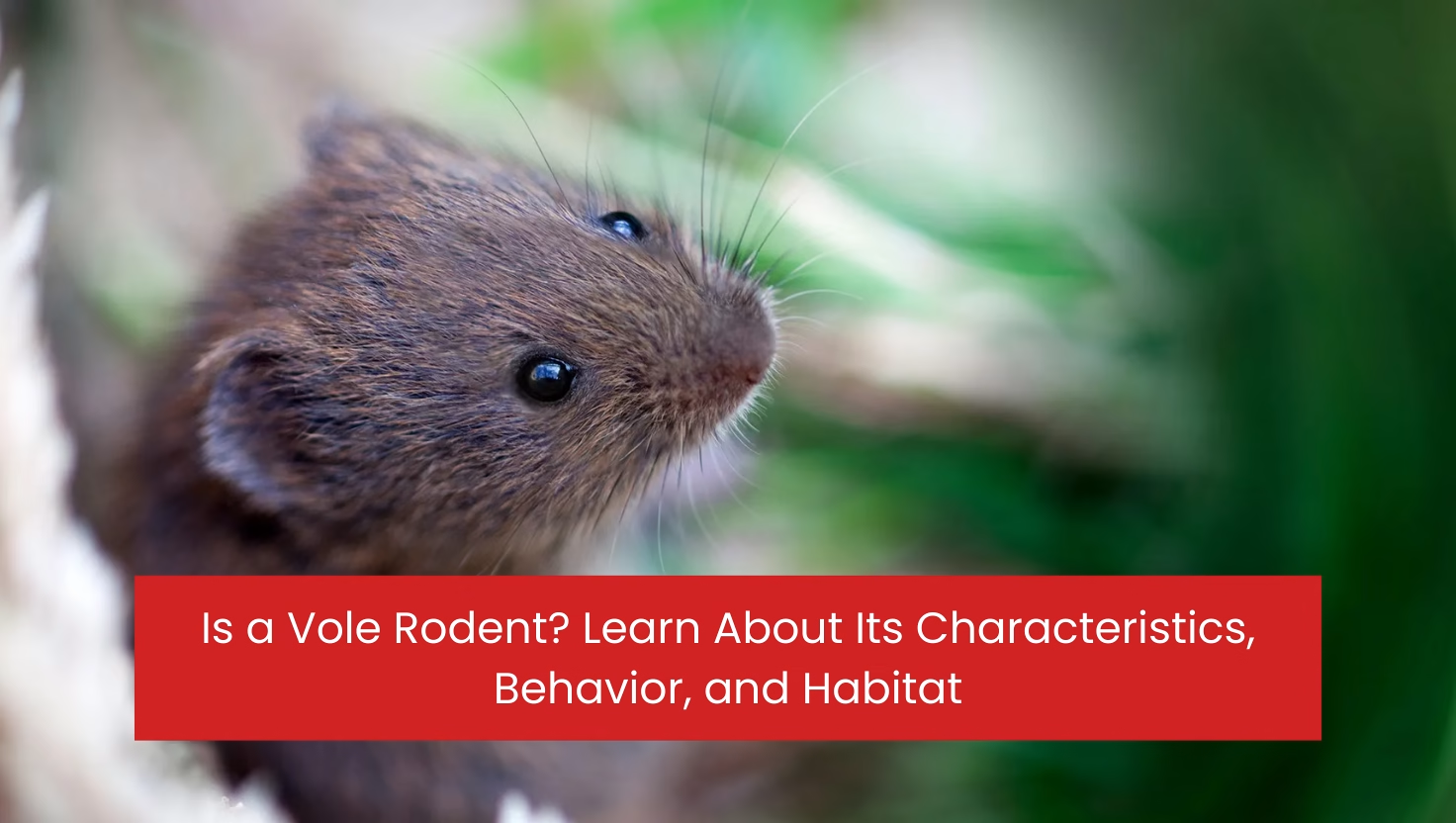
Voles are small, mouse-like rodents commonly found in North America, Europe, and Asia. Often mistaken for mice, voles have stocky bodies, short tails, and rounded heads that help distinguish them from other rodents. They play an important role in ecosystems by feeding on plants, aerating soil through burrowing, and serving as prey for predators such as owls, foxes, and snakes. Understanding voles helps us appreciate their ecological significance and the unique adaptations that make them successful small mammals. Their ability to thrive in diverse habitats and reproduce rapidly also makes them a key species in maintaining ecological balance.
Is a Vole Rodent?
Voles are true rodents belonging to the order Rodentia. They share common rodent features, including continuously growing incisors used for gnawing plant material. Unlike mice or shrews, voles are primarily herbivorous and have physical adaptations suited for digging, foraging, and surviving in grassy or forested environments. They have short tails, dense fur, small ears, and rounded noses. Voles create shallow burrows and surface runways to travel safely while avoiding predators. These traits make them highly adapted to their habitats and an essential part of the food chain.
Characteristics of a Vole Rodent
1. Stocky Body and Short Tail
Voles have compact, rounded bodies with short tails that help reduce heat loss and maintain body warmth during colder months. Their dense fur protects them from extreme weather and predators, and their stocky shape allows efficient movement through tunnels, grasses, and dense vegetation. These physical traits distinguish them clearly from other small rodents like mice and allow them to survive effectively in various habitats. Their compact body also helps them hide quickly from predators in tight spaces and thick vegetation.
2. Small Rounded Head
Voles have a blunt, rounded head with small ears partially hidden in fur, reducing visibility to predators. This adaptation helps them navigate dense grasses, underbrush, or snow-covered areas safely while foraging. Their head shape also supports their herbivorous diet by providing stronger jaw muscles for chewing roots, seeds, and tough plant material efficiently. The rounded head also improves their sense of smell, which is vital for locating food and detecting danger.
Must Read: How to get rid of rodents
3. Continuously Growing Teeth
Like all rodents, voles have incisors that grow continuously throughout their lives. Their teeth are perfectly adapted for gnawing grasses, roots, seeds, and other plant material, allowing them to maintain a constant supply of food. This dental adaptation prevents tooth overgrowth, enables efficient digestion, and ensures survival in habitats with limited food availability, giving voles a significant advantage over other small mammals. Proper gnawing also helps them maintain healthy teeth and prevents jaw problems that could hinder feeding.
4. Efficient Digestion
Voles have a digestive system capable of fermenting fibrous plant material in their cecum, maximizing nutrient absorption. This allows them to survive primarily on herbivorous diets, even when food quality is low. Their digestion supports rapid growth, reproduction, and energy for burrowing activities. It also helps them process tough grasses and roots that many other rodents cannot efficiently utilize, making voles essential herbivores in their ecosystems. Their efficient digestion enables them to extract maximum nutrition from limited food resources during winter.
Helpful For You: Rodent Scant Identification Guide
5. Burrowing and Tunnel Systems
Voles dig shallow burrows and create intricate surface runways in grasses and under vegetation. These tunnels provide shelter, protection from predators, and safe access to food sources. Their burrowing also improves soil aeration, supports plant root growth, and contributes significantly to ecosystem health by creating microhabitats for insects and small invertebrates, enhancing biodiversity. These tunnels also serve as nesting sites and safe pathways for young voles to explore their surroundings.
6. Reproductive Strategy
Voles reproduce very quickly, with females capable of producing multiple litters per year. Each litter typically contains 3–8 young that mature within a few weeks. This rapid reproductive cycle ensures population stability despite predation, harsh weather, and habitat challenges. Their high reproductive potential allows voles to recover quickly from population declines and maintain their ecological role as herbivores and prey for predators. High reproductive rates also allow voles to colonize new areas efficiently and sustain their populations across various habitats.
7. Herbivorous Diet
Voles feed mainly on grasses, roots, seeds, and occasionally bark or soft shoots. Some species may supplement their diet with insects for extra protein. Their feeding habits influence plant community composition, affect seed dispersal, and serve as a key food source for birds of prey, snakes, and small carnivores. Voles play an essential role in shaping vegetation and supporting ecosystem balance. Their feeding behavior also impacts agricultural crops, sometimes making them minor pests in farmlands.
8. Behavior and Social Habits
Voles are mostly active during dawn and dusk, living in small family groups with defined territories. They communicate using scent marking, vocalizations, and body language, particularly when defending their area or signaling danger. These social behaviors help maintain population structures, reduce conflicts, and enhance survival. Voles’ behavior also ensures efficient foraging while avoiding predators in dense vegetation. Their social interactions contribute to cooperative behaviors such as shared burrow maintenance and predator alerting.
Also Like: Why Rodents Love Commercial Property
9. Geographic Distribution
Voles are found across North America, Europe, and Asia, inhabiting meadows, grasslands, forests, and occasionally agricultural fields. Their presence is closely linked to vegetation density, soil type, and environmental conditions. Voles’ distribution patterns influence local food webs and ecosystem dynamics, as they provide prey for predators and impact plant populations through their foraging and burrowing activities. Some vole species are highly adaptable, thriving in both natural and human-modified landscapes.
Also Read: Do Rodent Repellents Work
10. Population Cycles
Vole populations experience boom-and-bust cycles depending on food availability, predation pressure, and seasonal weather conditions. Short lifespans combined with high reproductive rates lead to dramatic population fluctuations, which are natural and ecologically important. These cycles affect predator populations, plant growth, and even soil structure, highlighting the critical ecological role voles play in maintaining balance within terrestrial ecosystems. Understanding these population cycles is also important for farmers and conservationists managing crop damage and habitat health.
Fun Facts About Voles:
- Voles have short, hairy tails compared to long-tailed mice.
- They create intricate surface runways for safe travel and foraging.
- Voles are prey for owls, foxes, snakes, and other predators.
- Despite their small size, voles can significantly impact plant communities.
You may also like:
- Are Hyraxes Rodents?
- Are Otters Rodents?
- Is a Raccoon a Rodent
- Is a Ferret a Rodent
- Is a Hamster a Rodent
- Are possums Rodents
- Is a Sugar Glider a Rodent?
Conclusion
Voles are small rodents with distinctive physical traits, behaviors, and ecological roles. Their stocky bodies, short tails, rounded heads, burrowing habits, and herbivorous diets make them highly adapted to grasslands, forests, and meadows. Voles reproduce quickly, serve as prey for many predators, and influence vegetation growth and soil health. Understanding these small rodents highlights their ecological importance and the diversity of life in terrestrial habitats worldwide. Their social structures and seasonal population fluctuations also play a crucial role in shaping the dynamics of the ecosystems they inhabit.
FAQs
Are voles rodents?
Yes, voles are true rodents belonging to the order Rodentia, closely related to mice and rats.
How can you tell a vole from a mouse?
Voles have stockier bodies, short tails, blunt noses, and dense fur, while mice are leaner with long tails and pointed noses.
What do voles eat?
Voles are mainly herbivorous, eating grasses, roots, seeds, and occasionally bark or insects.
Where do voles live?
Voles are found in North America, Europe, and Asia, preferring meadows, grasslands, and forested areas.
Do voles dig tunnels?
Yes, voles dig shallow burrows and create surface runways to move safely and access food.